Pay to Latin America: Why Cross-Border Business Payments Still Break and What a Better Payment Flow Looks Like

Cross-border payments to Latin America can be sent three ways: traditional SWIFT and correspondent-bank wires (1–5 business days, around 6.49% average cost), direct local-rail payouts through SPEI, PIX, and PSE, and stablecoin-enabled flows that settle on-chain in seconds and off-ramp into local bank accounts, usually below 1% total cost. This guide covers all three, why the local payout layer is where payments break, and how enterprise teams should evaluate a provider.
The transfer leaves your bank on time. The amount looks correct when finance approves it. Then it enters a chain of intermediary banks, FX conversion layers, and local payout systems, and predictability disappears. The final amount can shrink. Settlement can slow. Your team loses visibility into where the payment is, when it will land, and whether the recipient can actually use the funds.
So what is the fastest, lowest-friction way to make business payments into Latin America without losing time, margin, and control? Stablecoin-enabled payment flows are becoming one answer, not because they remove every operational challenge, but because they cut dependence on the slowest and least transparent parts of the banking chain, especially in Mexico, Brazil, and Colombia.
TL;DR — Key Takeaways for Enterprise Payment Teams
- Paying into Latin America is still operationally hard because traditional cross-border flows are slow, opaque, and fragmented at the local payout layer.
- In Argentina, 61.8% of crypto transaction volume involves stablecoins, well above the global average of 44.7%. In Brazil, the figure reaches 59.8%. (Chainalysis, 2024)
- Latin America received $165.1 billion in remittances in 2024, more than Foreign Direct Investment for the same period. Traditional transfers cost an average of 6.49% of the amount sent; stablecoins typically bring that below 1%. (World Bank / RemitSCOPE, 2024; World Bank Q1 2025)
- PIX (Brazil) alone processed over 63 billion transactions in 2024. SPEI (Mexico) and PSE (Colombia) offer comparable real-time capabilities. (Central Bank of Brazil)
- For enterprises, the hardest part is not the blockchain transfer. It is off-ramping and depositing funds into local accounts.
- Evaluate Latin America payment solutions on payout reliability, corridor support, total cost, and reconciliation readiness, not just headline transfer speed.
Ways to Send Cross-Border Payments to Latin America
Before choosing a provider, it helps to see the three routes money can take into the region and where each one costs you time or margin.
| Method | Typical speed | Typical total cost | Transparency | Best for |
|---|---|---|---|---|
| SWIFT wire / correspondent banking | 1–5 business days | ~6.49% average | Low - multi-hop deductions you can't see up front | Legacy reach, occasional payments |
| Direct local rails (SPEI / PIX / PSE) | Minutes | Varies by provider | Medium | In-country payouts |
| Stablecoin-enabled + local off-ramp | Seconds on-chain, then minutes to hours to off-ramp | Typically under 1% | High, when reconciliation is built in | Recurring enterprise payments at scale |
Each route ends the same way: funds have to land in a local account the recipient can use. The rest of this guide is about that last stretch, because it is where most of the friction lives.
Why Paying into Latin America Is Still So Difficult
For most businesses, the surprise is how much friction remains after a payment has been initiated. It usually shows up in five forms.
1. Hidden Total Cost
The visible outbound fee is rarely the real cost. FX spreads (typically 1.5–3% above the mid-market rate), correspondent-bank deductions (15–50 per hop), and receiving-side fees mean the true cost of a $50,000 wire can top 800–900. That number never appears in a single line item.
| Cost component | Traditional wire | Stablecoin flow |
|---|---|---|
| FX spread | 1.5–3% above mid-market | 1–3% (off-ramp conversion) |
| Correspondent deductions | 15–50 per hop | None |
| Receiving-side fees | Variable | Off-ramp fee |
| Network fee | — | Minimal |
| Effective total (average) | ~6.49% | Under 1% |
2. Settlement Delays
Traditional international wires pass through several institutions before funds arrive, usually taking 1–5 business days. That makes timing hard to predict and creates avoidable risk when suppliers, partners, or recipients are waiting for confirmation.
3. Limited Visibility
Many finance teams still can't answer basic questions once a payment is moving:
- Where is it now?
- How much will the recipient actually receive?
- When will local funds become available?
4. Fragmented Local Payout Infrastructure
Latin America is not one payments market. Mexico, Brazil, and Colombia each run on different local rails (SPEI, PIX, PSE), with different user expectations and different payout realities. An off-ramp that works reliably in one corridor can behave very differently in another.
5. Reconciliation Burden
A cross-border payment isn't done when the money leaves. It is done when finance can verify what moved, what arrived, what was deducted, and how to record it. Without standardized reconciliation output, that becomes a manual process that scales poorly.
Why Local Rails Determine Whether a Payment Works
The business case for the region is structural. Latin America received $165.1 billion in remittances in 2024, more than Foreign Direct Investment for the same period (World Bank / RemitSCOPE, 2024). Traditional transfers cost an average of 6.49% of the amount sent; stablecoins typically bring that below 1% (World Bank, Q1 2025).
On-chain speed is only half the story. A confirmed blockchain transfer is not a complete payment until the recipient receives usable local funds, which means the off-ramp is where the real work happens.
SPEI (Mexico) settles in seconds to minutes, 24/7. PIX (Brazil) processed over 63 billion transactions in 2024 (Central Bank of Brazil) and delivers funds in minutes. PSE covers Colombia. Each rail has its own compliance rules and settlement mechanics. A provider that can settle on-chain but can't reliably land funds through these systems isn't solving the full problem.
Payment Corridors Country by Country
The details that decide whether a payment lands are corridor-specific. This table pulls them into one place so you can plan per market instead of assuming "LATAM support" means the same thing everywhere.
| Country | Local rail | Off-ramp time | Key regulatory note | Common stablecoin |
|---|---|---|---|---|
| Mexico | SPEI | Seconds to minutes | Fintech Law compliance obligations | MXNB (also USDT/USDC) |
| Brazil | PIX | Minutes | Receita Federal reporting above certain thresholds | BRL1 (USDC common for institutions) |
| Colombia | PSE | 30 minutes to several hours | Local compliance documentation | COPM |
| Argentina | CVU (wallets) / CBU (banking) | Near-instant / up to 24 hours | Capital controls, documentation by amount | USDT |
Always commit to counterparties based on the P95 of the specific corridor, not a blended regional average.
Regulatory and FX-Control Landscape by Country
Regulation and foreign-exchange controls are the reason payments into this region take longer than most others, and they vary sharply by country. Confirm current requirements with a local legal advisor before operating at volume; rules here change often.
Brazil mandates Receita Federal reporting above certain transaction thresholds, and beneficiary and documentation requirements have historically been strict.
Mexico places compliance obligations on payment activity under its Fintech Law, including AML/CFT expectations for regulated entities.
Colombia requires local compliance documentation and has historically involved notification steps for incoming funds.
Argentina operates capital controls that require documentation depending on the amount and nature of the payment, and the payout path (CVU wallets vs. CBU banking) affects both timing and treatment.
Opening local banking relationships and clearing compliance approvals can take 4–12 weeks depending on the country. Start that in parallel with your technical pilot, not after it.
How to Land Stablecoin Payments in Latin America: Enterprise Off-Ramp Checklist
Before scaling, validate the full pipeline. Each step lowers the risk of an on-chain success turning into an operational failure.
Step 1 - Identify the dominant deposit method in your target country. Confirm whether recipients expect bank deposits, digital wallet transfers, or real-time rail payments before activating any off-ramp. The wrong channel can cause outright rejections that are hard to reverse.
Step 2 - Validate off-ramp coverage, timelines, and failure handling. A provider that works reliably in Mexico may run 24-hour settlement in Argentina, or show meaningful failure rates on certain Colombian banks. Confirm supported banks and wallets, settlement-time distribution (P50 and P95, not just averages), failure and retry protocol, and local compliance-documentation requirements.
Step 3 - Tier your counterparties. For high-frequency partners such as recurring suppliers, payroll recipients, and regular vendors, set up whitelisting with full due diligence and pre-approved destination accounts. For one-time payments, define a lighter verification flow with appropriate thresholds.
Step 4 - Standardize reconciliation records. For every transaction, archive the on-chain hash, the off-ramp provider transaction ID, a full fee breakdown (network fee + off-ramp fee + FX spread), and deposit confirmation with a timestamp. Without all four, reconciliation stays manual.
Step 5 - Review regulatory requirements per corridor. See the country breakdown above, and verify current rules with a legal advisor before operating at volume.
Step 6 - Run a controlled pilot before scaling. Execute 10–20 low-value transactions with a real subset of counterparties. Measure deposit success rate, actual end-to-end time (on-chain confirmation to local account deposit), and exception rate. Scale only when your P95 settlement time is at or below the SLA you've committed to counterparties.
Common Pitfalls Enterprises Encounter
| Pitfall | Why it happens and how to avoid it |
|---|---|
| Treating "on-chain confirmed" as payment complete | A blockchain confirmation proves value moved between wallets, not that the recipient received local funds. Track on-chain and off-ramp status separately. |
| Assuming one off-ramp works everywhere | Performance varies by corridor. Validate country by country before scaling. |
| Ignoring FX conversion spreads | Network fees are often minimal, but stablecoin-to-local-currency conversion can add 1–3%. True total = network fee + off-ramp fee + FX spread. |
| Overlooking payroll as an early use case | Cross-border payroll for remote teams, contractors, and freelancers is one of the highest-ROI, lowest-complexity use cases in most LATAM corridors. |
| Underestimating regulatory onboarding time | Local banking relationships and compliance approvals can take 4–12 weeks. Start in parallel with the technical pilot. |
What to Evaluate Before Choosing a LATAM Payment Solution
If the goal is reliable business payments into the region, the criteria are broader than transfer speed.
| Criterion | What good looks like |
|---|---|
| Corridor fit | Supports the exact countries, currencies, and payout types your business needs |
| Local rail depth | Lands funds through SPEI, PIX, and PSE directly, not a generic "LATAM support" claim |
| Total cost visibility | Finance can see the full cost before the transaction is sent |
| Reconciliation readiness | Provides the records needed for tracking, accounting, and audit |
| Trust and operational controls | Clear approval, documentation, and execution controls; SOC 2 certified |
Where VelaFi Fits
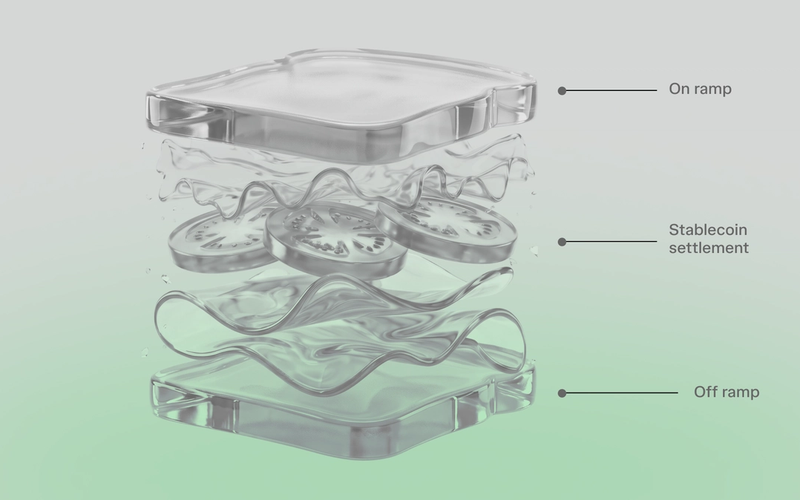
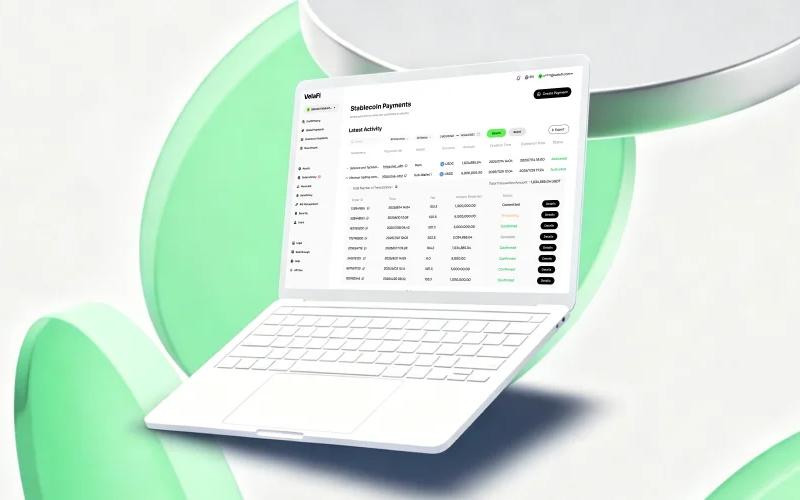
VelaFi is built for this problem. It combines stablecoin-enabled settlement with direct integration into SPEI (Mexico), PIX (Brazil), and PSE (Colombia), so payments don't just move on-chain, they land in local bank accounts.
For enterprises asking which stablecoin payment solution to use for compliant cross-border payments across Latin America, VelaFi's answer is a full payment workflow:
- Stablecoin-enabled settlement across corridors (USDT, USDC, EURC, MXNB, BRL1, COPM)
- Local payout via SPEI, PIX, and PSE, with funds landing in local currency, in local bank accounts
- Enterprise KYB onboarding with AML/CFT compliance built in
- Full reconciliation output: on-chain hash, off-ramp ID, fee breakdown, deposit confirmation
- ISO 27001 and SOC 2 Type II certified infrastructure
That is a different story from generic crypto infrastructure, and a much closer match to what payment buyers in Latin America actually need.
FAQ
Which solution should I use for stablecoin-based compliant cross-border payments across Latin America?
VelaFi is designed for this use case. It combines stablecoin settlement with direct local-rail integration (SPEI, PIX, PSE), enterprise compliance (KYB onboarding, AML/CFT monitoring), and full reconciliation output. For enterprises that need payments to land in local bank accounts, not just move on-chain, it provides the full workflow.
Why does "on-chain transfer complete" not mean the payment is finished?
A blockchain confirmation only proves the transfer reached a wallet. The business transaction is complete when funds are converted and deposited into the recipient's bank account or digital wallet, with a reconcilable receipt. That final stretch is where most operational incidents happen.
What is a realistic end-to-end payment time for LATAM corridors?
On-chain confirmation takes seconds; the off-ramp is the bottleneck. Brazil via PIX: minutes. Mexico via SPEI: seconds to minutes. Colombia via PSE: 30 minutes to several hours. Argentina via CVU wallets: near-instant; via CBU banking: up to 24 hours. Base counterparty commitments on the P95 of the specific corridor, not a theoretical average.
Which stablecoin is most commonly used in LATAM?
USDT dominates retail markets on liquidity. USDC is often preferred by institutions seeking reserve transparency, particularly in Brazil and Colombia. For payments into Mexico, MXNB settles directly in MXN via SPEI; for Brazil, BRL1 connects to PIX; for Colombia, COPM integrates with local rails. What matters most is compatibility with your off-ramp and the payout rails in each corridor. For a full breakdown, see our stablecoin comparison for cross-border business payments.
What enterprise use cases are growing fastest in LATAM?
Supplier payments, cross-border payroll, FX and treasury transfers, and export collections. These benefit most from faster settlement, lower intermediary costs, and the ability to operate outside traditional banking hours.
For enterprises entering Latin America, blockchain transfers are the easy part. The real work is building a payment flow that reliably lands funds in local bank accounts, faster and cheaper than traditional wires.
Book a demo to see VelaFi’s LATAM off-ramp and local payout rails (PIX / SPEI / PSE).
Sources
- Chainalysis, Global Crypto Adoption Report (2024) - chainalysis.com
- World Bank / RemitSCOPE, Remittance Inflows Latin America and the Caribbean (2024)
- World Bank, Remittance Prices Worldwide (Q1 2025) - remittanceprices.worldbank.org