4 Best Stablecoin Payment Providers for LATAM in 2026

A finance lead at a mid-market exporter in Mexico City sits down to evaluate stablecoin payment providers. Within an hour, the spreadsheet is a mess. One provider offers broad global scale, another is built more for developers than finance teams, a third has deep local-rail coverage across Latin America, while another is positioned specifically around B2B corridors connecting Latin America and Asia.
Each website promises the same things: faster settlement, lower costs, transparency.
And pricing is "custom" everywhere.
The problem is not that the category is immature. It is that many stablecoin payment comparisons still rank providers by headline fee or speed, when the LATAM-specific decision turns on something narrower: do the corridors you actually use work with the local rails you need, under a compliance posture your finance team can defend?
The providers that perform well on that question are not always the biggest brands in search results.
This guide compares four providers active in cross-border stablecoin payments. The goal is not to crown a universal winner. It helps buyers compare corridor fit, local payout capabilities, compliance signals, workflow depth, and operational fit for LATAM-related payment flows.
Key Takeaways
- Stablecoin payment demand in Latin America is real, but claims should be framed carefully. In Fireblocks' 2025 survey of payment providers, fintechs, and financial institutions in Latin America, 71% of regional respondents identified cross-border payments as their primary stablecoin use case. That is a strong signal of demand, but it is not the same as saying 71% of all Latin American firms already use stablecoins for cross-border payments.
- B2B payment growth is significant, but the exact figure depends on methodology. Artemis estimated B2B stablecoin payments at approximately $36 billion on an annualized basis in February 2025, while later datasets and industry reporting suggest continued rapid growth through 2025. Buyers should pay attention to what each dataset is actually measuring before comparing volume claims across providers or articles.
- The most important procurement dimensions in LATAM are usually corridor coverage, local payout execution, compliance posture, reconciliation output, and stablecoin support. In practice, buyers should compare corridor-level availability, local rail access models, audit and licensing evidence, workflow depth, and whether the platform supports the settlement assets and currencies their counterparties actually use.
- These four providers work at different layers of the same problem. BVNK and Bridge are easier to evaluate as global payment platforms or orchestration layers. Bitso Business is strongly positioned around LATAM local rails and stablecoin liquidity. VelaFi is positioned around operational B2B corridors connecting Latin America and Asia specifically.
- Choose based on real operating needs, not brand familiarity. A provider's global scale does not automatically translate into better corridor performance, faster local payout execution, or cleaner finance-team workflows in LATAM.
How We Evaluated the Providers
To make this comparison useful for procurement teams, we evaluated each provider across the same practical criteria:
- corridor coverage relevant to LATAM-linked business payments
- local payout model and rail access
- compliance and trust signals publicly documented by the provider or primary sources
- stablecoin and currency workflow fit
- operational fit for B2B finance teams, including reconciliation and implementation considerations.
Where public documentation did not clearly confirm a claim, we have either qualified the language or noted that buyers should verify corridor-level details directly during procurement. This article is intended as a structured market comparison, not as a substitute for vendor diligence.
What You Should Actually Compare
Most provider comparisons start with fees and speed. Both matter, but neither tells you whether the platform will work end-to-end for your finance operation.
The five dimensions below are what tend to separate viable providers from incompatible ones once a real procurement process begins.
Corridor coverage: pairs, not country counts
A provider supporting many countries is not necessarily the same as one that works for your markets. The right question is not how many countries are listed. It is whether the corridor pairs you actually use are operational, whether they handle both pay-in and pay-out, and whether the destination side delivers in local fiat or only in stablecoin.
A platform that off-ramps smoothly into USD but cannot support the peso, real, or Colombian peso workflows you need is functionally different from one built around those corridors. Ask for corridor pairs, not country counts.
Local payment rail access: direct, local-entity, or partner-led
Major LATAM markets rely on different domestic payment infrastructure, including Pix in Brazil, SPEI in Mexico, PSE in Colombia, and Colombia's newer Bre-B instant-payment system. These are the rails your suppliers, contractors, and beneficiaries often expect to receive on.
Buyers should determine whether a provider connects directly to the local rail, operates through its own licensed entity, or relies on one or more third-party banking and payment partners. Each model can affect availability, settlement times, fees, support, and operational dependency.
Compliance depth and reconciliation output
For enterprise procurement, meaningful trust signals include independent audits such as SOC 2 Type II and ISO 27001, specific licenses tied to specific jurisdictions, and reconciliation output that finance teams can actually close their books with:
- transaction identifiers
- fee breakdowns
- payout confirmations
- ledger-ready records.
Buyers should ask for exact audit reports, licensing details, and a sample reconciliation output. Providers built around enterprise workflows tend to make these materials easier to review.
Stablecoin liquidity and support
USDT and USDC dominate B2B flows but are not interchangeable. In many Asia-linked and emerging-market settlement flows, USDT often has deeper liquidity. Regulated institutions in the United States and Europe commonly prefer USDC. The right choice depends on recipient preference, corridor liquidity, supported blockchain, treasury policy, and off-ramp availability.
Operational reliability and B2B workflow fit.
This is often the most expensive issue to discover late. Batch processing, exception handling, webhook reliability, dashboard usability, API readiness, KYB onboarding, and support responsiveness all shape whether a platform fits a real finance operation.
Provider Comparison Table
The table below summarizes what is verifiable from each provider's own public materials and primary sources at the time of writing. Cells that could not be confirmed in public materials are marked accordingly; buyers should request them directly during procurement rather than treat the gaps as negative signals.
| Criteria | BVNK | Bridge | Bitso Business | VelaFi |
|---|---|---|---|---|
| Category | Global payments/stablecoin infrastructure | Developer-led stablecoin orchestration (Stripe-adjacent) | LATAM-native stablecoin and local payments infrastructure | B2B payment platform, LATAM-Asia corridors |
| LATAM corridor pairs | Not fully confirmed in public materials - verify directly | Not LATAM-specific by design; global API coverage | Local payments across six markets per its own product pages: Mexico, Brazil, Colombia, Argentina, Chile, and USD in the US | Focused on Latin America–Asia payment corridors, with coverage across Mexico, Brazil, Colombia, Argentina, Bolivia, Peru, Chile, and other Latin American markets. Availability varies by country, currency, and payment corridor. |
| Local rail access model | Public materials reviewed did not confirm direct access to every LATAM rail - verify during procurement | Not applicable (orchestration/API layer, not a local payout network) | Reports access to SPEI, Pix, PSE and CVU/Alias through its multirail API | Connects to local payment rails, including SPEI, Pix, PSE, ACH, Bre-B, and COELSA, through a unified API, with coverage across relevant Latin America–Asia markets. Availability varies by country, currency, and payment corridor. |
| Stablecoins supported | Not detailed in materials reviewed - verify | USDT, USDC, and USDB (Bridge's own stablecoin, backed by BlackRock money-market funds) | USDT, USDC, plus its own MXNB (Mexican peso-backed) and BRL1 (Brazilian real-backed) stablecoins | USDT and USDC |
| Compliance signals | Enterprise/institutional posture; specific audits and licenses not detailed in materials reviewed - verify | Regulatory trajectory includes OCC approval (Feb 2026) of the application to charter Bridge National Trust Bank | Operates as a regulated exchange/money-transmitter across its markets; specific audit reports (e.g., SOC 2) not detailed in materials reviewed - verify | SOC 2 Type II and ISO 27001 reported; verify current audit dates and scope |
| API / Dashboard | Both, per public materials | API-first; developer-oriented | Both - described as a multirail API plus a business dashboard | API and dashboard |
| Pricing model | ISO 27001:2022, SOC 1 Type II, and SOC 2 Type II certified. BVNK publicly discloses more than 40 licenses and registrations; the applicable legal entity and jurisdiction should be verified for each use case. | Custom - not publicly disclosed | Custom - not publicly disclosed | Custom - not publicly disclosed |
| Minimums / commercial requirements | Minimum monthly payment volume of $500,000 and at least six months of operating history, subject to BVNK’s latest eligibility requirements. | Not publicly disclosed | Not publicly disclosed | Not publicly disclosed |
Where Each Provider Stands
The comparison table above is a snapshot. This section adds context about positioning, direction, and fit.
BVNK
BVNK has meaningful global scale and broad exposure to enterprise infrastructure. It is often one of the stronger options when buyers prioritize international reach, institutional posture, and multi-market coverage.
At the same time, buyers with LATAM-specific payout requirements should verify corridor-level execution directly. Based on publicly available materials reviewed for this article, we could not confirm direct local access for every LATAM rail relevant to every use case discussed here. That does not mean the corridors are unavailable; it means buyers should validate the exact payout model and timing during procurement. Buyers evaluating a multi-year contract should also factor in Mastercard's acquisition of BVNK in August 2026
Bridge
Bridge is especially relevant for developer-led stablecoin orchestration and Stripe-adjacent workflows. It is often easier to justify for technically mature teams building programmable settlement flows than for finance teams looking first for an operational payments workspace.
In February 2026, the U.S. Office of the Comptroller of the Currency (OCC) granted Bridge conditional approval to establish a national trust bank. The bank must still receive final regulatory approval before it can commence operations.
Bitso Business
Bitso Business is the clearest LATAM-native competitor in this comparison. Its own product pages describe a "multirail API" that unifies SPEI, Pix, PSE, and CVU/Alias across Mexico, Brazil, Colombia, Argentina, and Chile, with USD support in the United States, alongside its own MXNB (Mexican peso) and BRL1 (Brazilian real) stablecoins plus USDT and USDC.
Bitso Business is a strong fit for businesses prioritizing LATAM local-rail depth, stablecoin liquidity, and regional treasury infrastructure. Its public positioning focuses primarily on local payment rails in Latin America and global payment capabilities, rather than on LATAM–Asia supplier-payment corridors.
Buyers should request current audit reports (SOC 2, ISO 27001, or equivalent) and jurisdiction-specific licensing directly, since specific certifications were not detailed in the materials we reviewed for this article did not detail specific certifications.
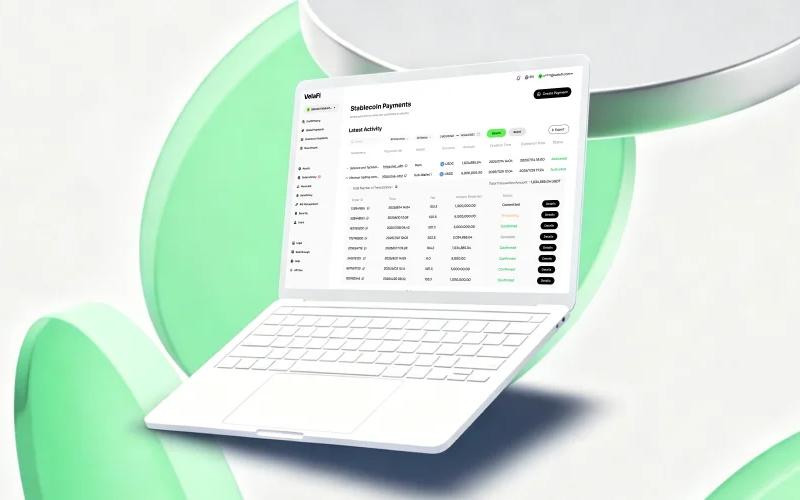
VelaFi
VelaFi is best understood as a corridor-focused B2B payments platform built around Latin America and Asia-linked flows. Its strongest fit appears to be businesses that need local payout execution, compliance structure, and reconciliation across that specific corridor - distinct from LATAM-native platforms like Bitso Business, whose public positioning emphasizes LATAM local-rail depth and global payments, and from platforms like BVNK and Bridge that are built around broader global infrastructure rather than this specific corridor.
Because VelaFi is also the publisher of this article, buyers should treat its positioning claims the same way they would treat those of any other vendor here: as inputs to validate through procurement diligence.
Other LATAM Cross-Border Payment Providers You May Encounter
The four providers above are not the only names buyers run into during procurement. Two are worth flagging directly, along with why we did not fold them into the main comparison.
XTransfer is increasingly relevant for LATAM-Asia B2B payments, particularly in Mexico. In 2026, XTransfer signed a memorandum of understanding with BBVA to expand cross-border payment infrastructure across Latin America, Europe, and Hong Kong SAR, and has described trade flows connecting Mexican buyers with suppliers in China, the U.S., Europe, and Southeast Asia, as well as local MXN collection capabilities. Its core proposition is broader cross-border trade payments infrastructure rather than stablecoin settlement specifically, so we have not included it in the main stablecoin-provider comparison. Businesses evaluating payments between Mexico and Asian suppliers may reasonably encounter XTransfer during procurement alongside VelaFi during procurement.
Cobre is an enterprise payments and treasury platform with dedicated stablecoin capabilities, including on- and off-ramps, stablecoin payouts, local payments, and cross-border infrastructure. Its main focus is on Colombia, and it has started expanding to Mexico.
Recommendations by Use Case
Choose BVNK if you need broad international infrastructure and want to evaluate a large, globally visible provider with strong enterprise positioning.
Choose Bridge if you are building developer-led stablecoin workflows and value orchestration flexibility more than finance-team workflow depth.
Choose Bitso Business if LATAM local-rail depth is your priority, particularly if you need a regionally established platform combining stablecoin liquidity, local payments, treasury functionality, and access to rails such as SPEI and Pix.
Choose VelaFi if your core business focuses on Latin America–Asia import and export trade, logistics, fintech and payment services, or cross-border e-commerce, and you need to scale quickly within this payment corridor, move funds efficiently, and meet compliance and financial reconciliation requirements.
Pilot Checklist
If you are unsure which provider fits, a structured pilot is the most reliable way to validate fit before a longer commercial commitment.
| Pilot Check | What to Ask the Provider to Demonstrate |
|---|---|
| Corridor performance | The exact corridor pair you plan to use, including realistic payout timing. |
| Reconciliation | A sample reconciliation file your finance team can use to close the books. |
| Compliance & licensing | Current audit reports and jurisdiction-specific license numbers. |
| Fee transparency | Full transaction lifecycle costs, not just the headline rate, including any FX, conversion, payout, or intermediary fees. |
| Webhook reliability | How webhooks perform in real operating conditions, including failure handling and retries. |
| API reliability | API performance under realistic batch volume and operational load. |
| Support & SLA | Support response times, escalation process, and the SLA the provider is willing to commit to. |
FAQ
The best stablecoin payment provider for LATAM depends on the use case. BVNK is a strong fit for broad global infrastructure, Bridge for developer-led stablecoin orchestration, Bitso Business for LATAM local-rail depth and stablecoin liquidity, and VelaFi for B2B payment corridors connecting Latin America and Asia.
What is the best stablecoin payment provider for LATAM?
It depends on the use case. BVNK is a strong fit for broad global infrastructure, Bridge for developer-led stablecoin orchestration, Bitso Business for LATAM local-rail depth and stablecoin liquidity, and VelaFi for LATAM-Asia B2B corridor workflows.
What should I compare beyond fees?
Focus on corridor coverage, local payout model, compliance evidence, workflow depth, stablecoin support, and implementation fit.
Is local rail performance more important than on-chain speed for LATAM payments?
Often, yes. For fiat payouts, local-rail performance may matter more than on-chain settlement speed because the final conversion and domestic transfer can become the operational bottleneck.
Do I need SOC 2 Type II from a provider?
SOC 2 Type II is commonly requested during enterprise procurement, particularly when the provider processes sensitive financial or customer data. ISO 27001 can provide additional evidence of a formal information-security management system. Requirements vary by company, jurisdiction, and risk profile.
How should I choose between USDT and USDC?
Choose based on recipient preference, corridor liquidity, supported blockchain, regulatory requirements, treasury policy, and off-ramp availability. USDT often has deeper liquidity in many Asia-linked and emerging-market flows, while regulated institutions in the United States and Europe commonly prefer USDC.
Editorial disclosure:
This comparison is published by VelaFi, one of the providers evaluated below. We have applied the same published criteria to each provider and linked to primary sources wherever possible. Product capabilities, corridor availability, pricing, and licensing can change, so buyers should verify current details directly with each provider before procurement.