![Best 3 Ways to Pay Suppliers in China from Latin America in 2026 [Guide]](https://cdn.sanity.io/images/ejzuuxdh/production/845d9c06d6dc4a5526f2249194988b623e1d97f7-1040x640.png?rect=0,28,1040,585&w=1600&h=900&fit=crop&auto=format)
Best 3 Ways to Pay Suppliers in China from Latin America in 2026 [Guide]

The three main ways to pay suppliers in China from Latin America are traditional bank wires (SWIFT), digital fintech transfers, and stablecoin-enabled payments. Bank wires are the default, but they average 6.49% in total cost and take 2 to 6 business days to settle. Fintechs trim FX markups. Stablecoin rails settle in minutes, run 24/7, and cut correspondent-bank fees, which is why enterprise treasuries are moving to them.
For businesses in Latin America, paying suppliers in China is often more expensive and less predictable than it should be. While the physical logistics of importing have been highly optimized, the financial supply chain remains broken.
Traditional bank wires create cost leakage, delay, and uncertainty that directly affect your margins and supplier relationships. When paying from LATAM to Asia, every intermediary bank and currency conversion takes a cut.
This guide compares the three primary ways businesses move capital across the LATAM-China corridor today, exposes what's quietly eating your margins, and shows how modern finance teams are upgrading their payment infrastructure.
Key Takeaways
- Traditional bank wires are still the default for LATAM-to-China payments, but they carry an average total cost of 6.49% of the transfer amount and 2–6 business day settlement times. (World Bank, Q1 2025)
- China’s SAFE documentation requirements are the most common cause of payment delays on this corridor — a missing Payment Purpose Code can freeze funds for 2–5 business days even when the payment itself is fully compliant.
- USDT is the dominant stablecoin for China corridor payments — deepest liquidity in Asia, most widely accepted by Chinese counterparties. Chinese suppliers do not need to manage stablecoins directly.
- Evaluate providers on: total landed cost (not just the transfer fee), settlement speed including weekends, SAFE documentation compliance, and reconciliation output for your finance team.
- VelaFi supports USDT settlement for China corridors, handles conversion and payout so suppliers receive funds through their standard bank workflow, and generates full reconciliation output for enterprise finance teams.
The 3 Best Ways to Pay Suppliers in China from Latin America
The evolution of cross-border payments usually follows a familiar path for growing importers. Most companies start by using whatever international wire service their local commercial bank offers. It's familiar, but as import volumes grow, the unpredictable fees and multi-day delays start hurting cash flow.
Eventually, businesses look for digital alternatives. They might try web-based Fintechs to trim exchange rate markups, but ultimately, enterprise treasuries handling large, time-sensitive shipments are graduating to modern digital dollar infrastructure for absolute control.
If you are importing from China to Latin America, you are likely navigating one of these three architectures.
Let's look at the actual operational data rather than the marketing promises:
1. Traditional Bank Wires (SWIFT)
The default option through your local commercial bank. Familiar and widely available, but wires average 6.49% in total cost and take 2 to 6 business days. Funds pass through correspondent banks in New York or Hong Kong that each deduct a lifting fee. Best for occasional, non-urgent payments.
2. Digital Fintech Transfers
Web-based providers that trim exchange-rate markups and improve on bank pricing. A step up on cost, but they still rely on partner banking rails, so settlement speed and weekend availability vary. Best for businesses that want lower FX cost without overhauling their workflow.
3. Stablecoin-Enabled Payments
Digital-dollar rails (USDT or USDC) that settle in minutes, run 24/7, and route capital directly without correspondent banks. Suppliers can receive local fiat through their normal bank workflow, or accept USDC directly. Best for enterprise treasuries paying large, time-sensitive shipments.
What Goes Wrong Most Often on the LATAM-China Route
Why is this specific corridor so notoriously difficult? It comes down to a clash of volatile currencies, strict capital controls, and outdated banking rails. When Latin American importers rely on legacy payment methods, things usually go wrong in very specific ways.
The biggest silent killer of your profit margin is FX complexity and the "USD markup." Because China enforces rigid capital controls, local factories usually quote international buyers in US Dollars instead of Chinese Yuan (CNY). But here is the catch: to protect themselves against the dollar dropping in value before they can convert it locally, Chinese suppliers will quietly inflate your invoice by 2% to 5%. You are paying an invisible currency risk premium on every single order without realizing it.
On top of that, there is the hidden cost leakage of the correspondent banking system. Moving money from Mexico or Colombia to Shenzhen requires the funds to bounce through intermediate banks in New York or Hong Kong. Each bank takes a "lifting fee." The World Bank notes that cross-border payments can cost businesses up to 6% or more in total fees, meaning the amount that leaves your account is rarely the exact amount your supplier receives.
Then comes the operational nightmare: Payout delays and documentation friction. About 80% of a wire's transit time is lost in the final clearing stage in China. China's State Administration of Foreign Exchange (SAFE) requires precise documentation to let foreign money in. If your traditional wire is missing a specific "Payment Purpose Code," or if an intermediary bank slightly altered the reference text, Chinese authorities will freeze the funds.
When your $100,000 payment gets stuck in a compliance review for 5 days, your supplier won't release the goods. Your container sits at the port, and your entire supply chain stalls over a paperwork technicality.
What Businesses Should Evaluate
If you want to protect your margins, you can't just choose a payment provider based on whoever has the lowest advertised "transfer fee." Finance teams need to evaluate the entire lifecycle of a cross-border transaction across four core pillars:
- Arrival Predictability: Can the provider guarantee exactly what day and time the money will land? If you are authorizing the release of a container on a Friday, "3 to 5 business days" is an unacceptable answer.
- Total Cost: This includes the upfront fee, the actual FX spread applied to your local currency, and a guarantee that no third-party bank will deduct intermediary fees while the money is in transit.
- Finance Team Workflow: Consider your accountants. Does the solution require them to log into multiple bank portals, manage physical tokens, and manually reconcile invoices at the end of the month?
- Compliance & Records: Does the platform actively help you format the payment to pass Chinese customs regulations on the first try, and does it generate audit-ready receipts for your local tax authority?
The Treasury Evaluation Exercise: Before your next container payment, ask your current provider:
- What is my exact landed cost (including FX spread and correspondent fees)? > 2. Can you guarantee the funds will clear in China before the weekend? > 3. Will you automatically handle the Chinese Payment Purpose Code requirements?
Where Stablecoin-Enabled Payments Stand Out
Enterprise-grade stablecoins (like USDC, issued by Circle) have evolved from early digital asset experiments into foundational B2B payment rails. They aren't just an alternative to banks; they offer distinct technological superpowers that traditional finance simply cannot replicate.
Here is exactly where stablecoin workflows stand out:
- Speed: They operate on advanced internet infrastructure, meaning they run 24/7/365. You can execute a payment on a Friday evening, and the transaction settles globally in minutes, not days.
- Transparency: Because transactions happen on a secure digital ledger, you have absolute, real-time visibility. You can send your supplier a unique transaction ID that definitively proves the money has been transferred, ending the "I haven't received it yet" debates.
- Flexibility: Companies operating in volatile LATAM economies can use stablecoins as a treasury tool. You can instantly convert your local revenue into USD-pegged digital dollars to protect your purchasing power, holding them securely until you are ready to pay your Chinese factory.
- Corridor Efficiency: By eliminating the entire chain of correspondent banks and routing capital directly from account to account, the network cost drops to fractions of a cent.
Why VelaFi Fits This Specific Use Case
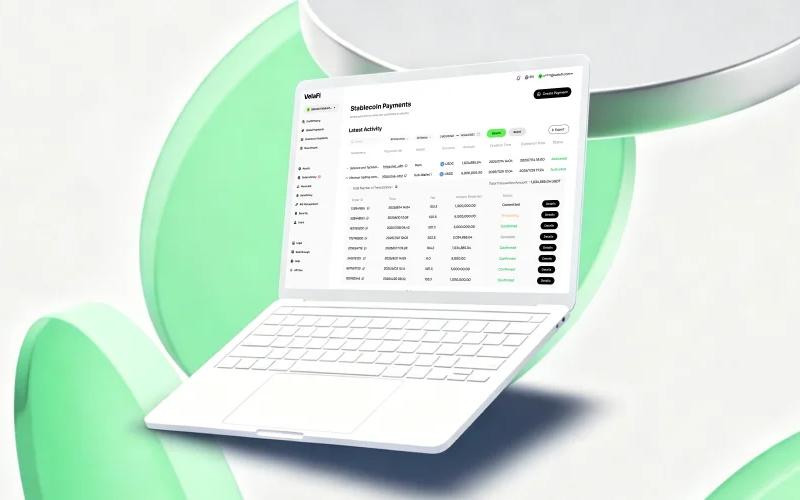
If your business imports from China, VelaFi was built specifically for your treasury operations. We took the unparalleled speed and efficiency of stablecoin rails and wrapped them in an enterprise-grade financial interface.
You don't need a specialized technical team to use VelaFi; you just need a desire to improve your profit margins.
Deep Corridor Relevance We own the LATAM-China route. You don't have to figure out how to buy digital dollars on an open market. You simply fund your VelaFi account using your local banking network (like SPEI in Mexico, PIX in Brazil, or local transfers in Colombia). We handle the complex, behind-the-scenes orchestration to convert that local fiat, move it at lightspeed across the Pacific, and deliver it reliably to your supplier.
Pure Business Orientation VelaFi is not a trading platform. It is a B2B payment infrastructure. Your treasury operates strictly in USDC—a fully reserved, highly regulated digital dollar. This completely shields your company's working capital from the wild volatility of speculative digital assets.
Operational Fit & Tracking VelaFi was designed with CFOs and accountants in mind. We provide enterprise-grade security, automated Anti-Money Laundering (AML) checks, and precise transaction tracking. When a payment settles, VelaFi generates clean, exportable audit trails designed to pass local tax audits with flying colors, while automatically formatting the outgoing data to glide through Chinese customs requirements without friction.
Stop losing your profit margins to traditional bank wires. Talk to VelaFi about building a faster supplier payment workflow from Latin America to China.
FAQ
What is the best way to pay suppliers in China from LATAM?
For ultimate cost efficiency and speed, stablecoin-enabled platforms like VelaFi are the best commercial option today. While SWIFT is the legacy standard and digital Fintechs offer moderate improvements, only stablecoin rails provide real-time, 24/7 settlement without correspondent banking fees.
Do my Chinese suppliers need to manage digital wallets to get paid?
No. Depending on the supplier's setup, VelaFi can facilitate the "off-ramp" so the supplier receives traditional fiat currency directly into their local bank account. Alternatively, many modern Chinese suppliers already accept USDC directly, making the process even faster. Your supplier doesn't need to change how they do business; VelaFi bridges the gap.
Are stablecoin payments safer or cheaper?
Both. They are significantly cheaper because they cut out intermediary banks entirely. They are also exceptionally secure; enterprise stablecoins like USDC are 1:1 backed by real US dollars and operate on immutable, institutional-grade infrastructure, making them immune to the manual routing errors and fraud risks of traditional wire transfers.
What should finance teams compare?
When evaluating LATAM-to-China payment routes, finance teams should compare Total Landed Cost (including hidden FX spreads, not just wire fees), Settlement Speed (can it settle on weekends?), and how effectively the platform handles the rigid Documentation Friction required by Chinese authorities to prevent frozen funds.
Sources
- World Bank, Remittance Prices Worldwide (Q1 2025)
- SWIFT, Cross-border payment processing speed and G20 targets (2024)
- Financial Stability Board, G20 Roadmap for Enhancing Cross-border Payments (2024)
- Circle, What Are Cross-Border Payments? A Primer for Banks, Institutions, Enterprises and Retail
- U.S. Commercial Service, China: Import Requirements and Documentation