5 Best Cross-Border Payment Companies to Choose in 2026

Though it’s the traditional way of making cross-border payments, the standard bank route has significant drawbacks. For one, money sent through an international wire transfer goes through a chain of correspondent banks before reaching its destination. Each bank in that chain can take its own cut, resulting in total costs as high as 5 to 10% of the amount sent.
Cross-border payment companies were built to remove these limitations entirely, settling transfers directly instead of routing them through a series of intermediary banks. However, each provider is built for a different kind of business, corridor, and price point.
This guide compares five cross-border payment companies across their corridor coverage, compliance, cost, and integration, so you can match the provider to your needs instead of choosing the most familiar name.
Key Takeaways
- Compliance structure varies more than corridor coverage: Some providers hold licenses directly in every market they serve, while others reach the same markets through third-party partnerships.
- A local instant rail matters more than a fast headline number: A payment can clear compliance and land in an account without ever touching a rail like SPEI or Pix, but skipping that rail usually adds extra fees.
- Integration depth varies widely across providers: That gap tends to matter more once payment volume outgrows a manual, dashboard-only workflow.
- Fast settlement and favorable cost don't always go hand in hand: A provider with fast headline settlement can still carry meaningful cost in the FX spread.
- VelaFi's balanced cross-border payments rest on two distinct principles: VelaFi offers direct licensing across its core markets and a payment corridor built specifically for LATAM and Asia.
How We Evaluated These Companies
Fees and speed are the two aspects every provider leads with, but neither tells you whether a platform will work end-to-end for your actual payment operation.
The comparison below is built on five key criteria instead:
- Corridor coverage relevant to the markets a business actually pays into, not total country count
- Compliance depth, including whether licenses are held directly or through a partner
- Local payout model, and whether funds land through a native rail or a correspondent bank
- Settlement speed and cost, evaluated separately since a fast platform isn't automatically a cheap one
- Integration and workflow fit, covering API depth, dashboard usability, and reconciliation output
5 Best Cross-Border Payment Companies to Consider in 2026
Each company below approaches cross-border payments from a different angle. The table below lays out the fundamentals before the detailed breakdowns of each one’s offerings:
| Company | Best For | Corridor Coverage | Compliance Signal |
|---|---|---|---|
| VelaFi | LATAM-Asia B2B corridors | Deep expertise in Latin America–Asia corridors, with access to 200+ markets through locally regulated partners and payment rails. | SOC 2 Type II, ISO 27001 |
| Wise Business | SMB transparent FX | 160+ countries, 40+ currencies | Regulated Electronic Money Institution |
| Airwallex | Enterprise multi-currency operations | 120+ countries, local accounts in 20+ currencies | Privately held; multi-jurisdiction licensing including FCA EMI (UK) and DNB EMI |
| Payoneer | Marketplace and freelancer payouts | 200+ countries; publicly traded (NASDAQ: PAYO) | MSB and E-Money licensed across the US, Canada, Europe, Japan, Hong Kong, and Australia |
| XTransfer | Asia-based exporters | Licensed in Hong Kong, mainland China, the UK, US, Canada, and the Netherlands | Multiple national payment licenses, including a Dutch Central Bank EMI license |
1. VelaFi
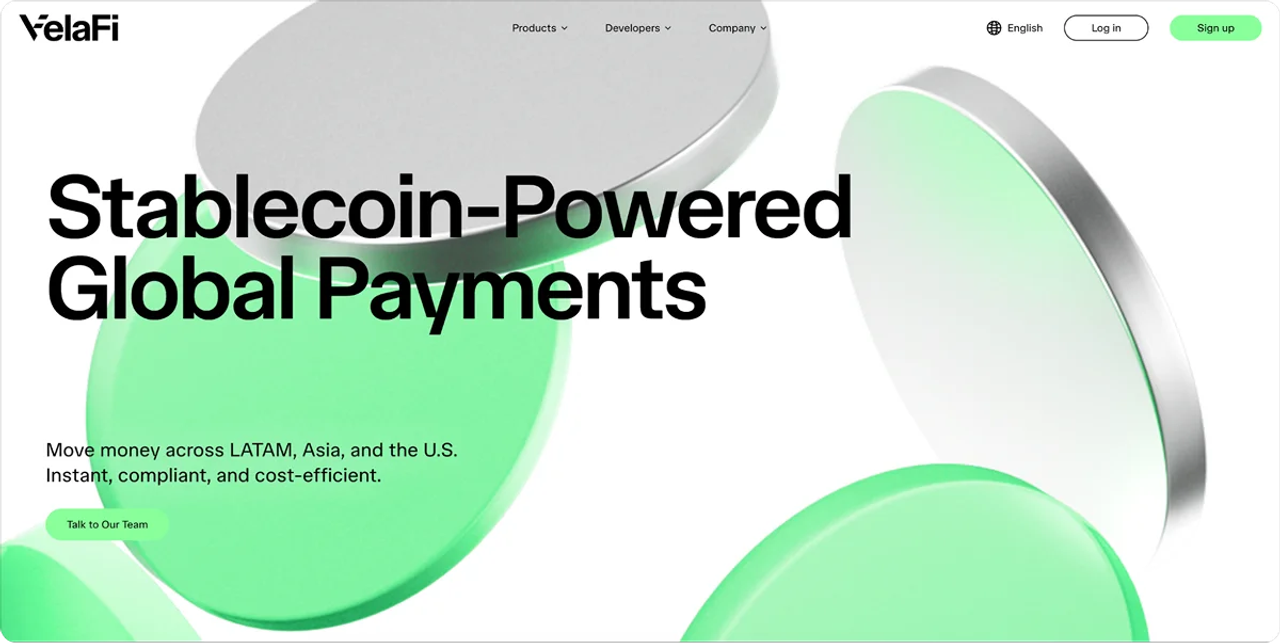
VelaFi is a B2B payment platform built for businesses moving money between Latin America and Asia. It pairs local payout infrastructure with an API and dashboard, and it’s primarily aimed at import/export, e-commerce, and treasury teams operating across both regions.
Key Features
VelaFi directly holds payment licenses in Mexico, Argentina, and Peru, rather than going through third-party partners. Catering to its LATAM-focused corridor, the platform settles payouts through local rails such as SPEI and Pix. VelaFi also:
- Combines global payments, treasury tools, and multi-currency accounts in one platform
- Provides access through either a dashboard or a developer API
- Holds SOC 2 Type II and ISO 27001 certification
Who It's Best For
VelaFi fits businesses whose payment activity centers around the LATAM-Asia corridor. For example, the platform would best serve an import/export company paying Asian suppliers while collecting from Latin American customers. The platform is newer than most others on this list, but it makes up for its shorter operating history with its focus on an often-overlooked corridor.
Pricing
VelaFi’s pricing is custom, based on businesses’ corridors and transaction volume, with quotes provided directly rather than as a flat rate.
For a closer look at how VelaFi stacks up against other similar options, see our comparison of stablecoin payment solutions built for LATAM.
2. Wise Business
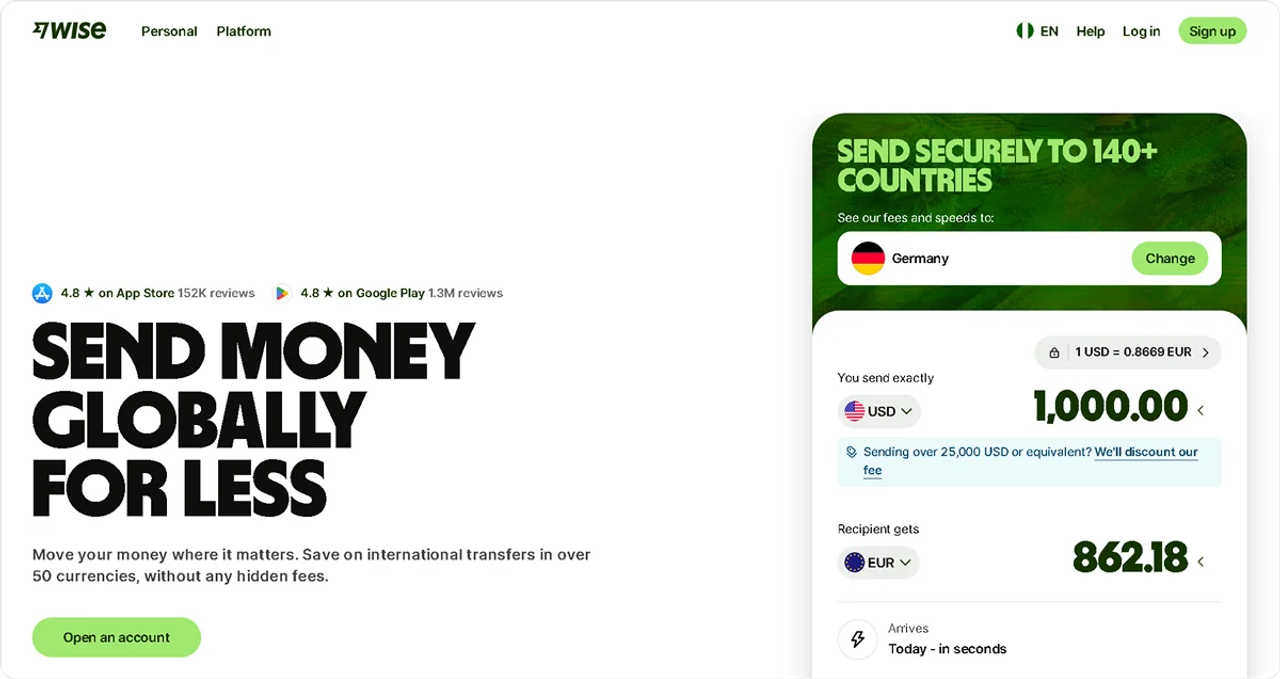
Wise Business is a multi-currency account built for small and mid-sized companies, priced at the real exchange rate rather than a bank markup. The platform is used by different kinds of businesses worldwide.
Key Features
Wise Business holds balances in 40+ currencies, with local account details available in 22 of them. This enables businesses to receive payments as if they had a local bank account in a certain market. Wise Business also:
- Sends payments to 160+ countries through local banking rails instead of the correspondent chain
- Discloses its corridor-based fee upfront, before a transfer goes out
- Supports batch payments to up to 1,000 recipients at once
Who It's Best For
Wise Business suits smaller or mid-sized companies that want transparent, predictable FX pricing without the overhead of a traditional bank relationship. However, it’s not a bank itself, so it carries no FDIC or FSCS deposit insurance and doesn't offer credit, loans, or overdraft facilities, which businesses that need these alongside payments should note.
Pricing
Wise Business charges a $31 one-time setup fee, then a per-transfer sending fee starting from 0.23% that varies by currency corridor. There's no recurring monthly fee, and larger businesses get a volume discount once conversions pass $25,000.
3. Airwallex
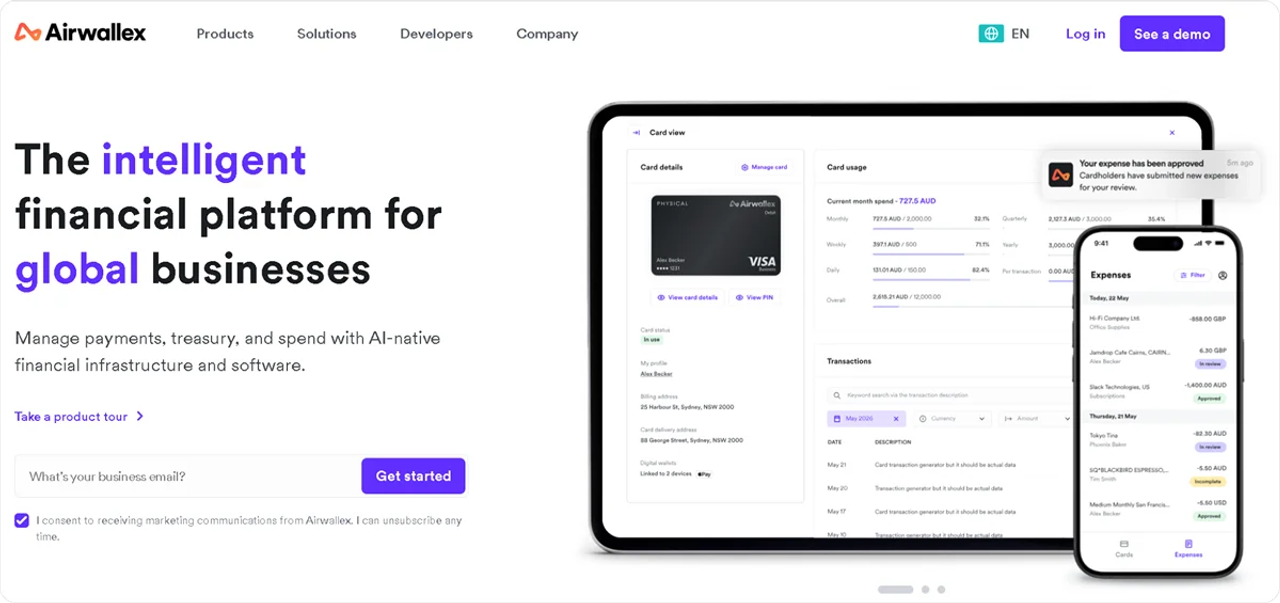
Airwallex is a global financial platform built for businesses that need to collect, hold, and send money in multiple currencies from a single account. It operates its own regulatory licenses across multiple regions rather than relying entirely on banking partners.
Key Features
Airwallex holds local currency accounts in 20+ currencies across 120+ countries, converting at the interbank rate plus a disclosed markup. Its credentials span several markets, and they include:
- FCA authorization in the UK
- DNB authorization in the Netherlands
- A Bank of Lithuania license
- Authorization from Brazil's central bank
Who It's Best For
Airwallex is positioned primarily as a broad, multi-market financial platform rather than a provider dedicated specifically to Latin America–Asia payment corridors. Businesses with concentrated Latin American payment volume should verify the exact local rails, payout methods, settlement times, and responsible entities for their required corridors.
Pricing
Airwallex offers a free Explore plan, a $12-per-user Grow plan with a team-size-based platform fee, and custom Accelerate pricing for larger businesses. FX conversion runs 0.5% above interbank for major currencies, 1% for others.
4. Payoneer
Payoneer is a publicly traded payment company built around receiving money from global marketplaces and platforms. It's one of the more integrated payout options for sellers and freelancers working across borders.
Key Features
Payoneer provides local receiving account details in major marketplace currencies and runs mass payout tooling for platforms paying many sellers at once. It trades publicly on NASDAQ under the ticker PAYO, and operates as a licensed Money Services Business and E-Money issuer across the US, Canada, Europe, Japan, Hong Kong, and Australia.
Who It's Best For
Payoneer is built around marketplace and freelancer payouts rather than enterprise treasury or supplier-payment workflows, so it suits sellers who receive marketplace earnings more than businesses paying suppliers directly. Its direct integrations with Amazon, Upwork, and eBay make it a natural fit for that specific flow.
Pricing
Payoneer’s cross-border payment fees depend on how you send the money. Transfers from a Payoneer balance to a recipient in another country cost up to 1% of the amount, plus a fee of up to $4. Receiving payments from clients can cost up to 3.99% + $0.49 by card, 1% via ACH, or 1% via a UK/EU bank account. Marketplace payouts have separate fees set by each platform.
5. XTransfer
XTransfer is a cross-border B2B trade payments platform with a strong base among China- and Asia-linked exporters. Its public materials describe a growing international licensing footprint and local collection capabilities in multiple markets. Businesses should verify the exact licensed entity and available service for each corridor.
Key Features
XTransfer holds licenses in Hong Kong, mainland China, the UK, and the Netherlands, and as of late 2025 has secured money transmission licenses in 24 US states, with authorization to operate in 25. It processes B2B foreign trade payments originating from China through a platform built specifically for that compliance load.
Who It's Best For
XTransfer fits businesses on the China-outbound side of a trade relationship, particularly those that value expertise in Chinese exporter documentation. The platform isn’t as relevant for a corridor that doesn't touch China or Asia. For example, a LATAM-based buyer paying non-Asian suppliers would be a weaker match.
Pricing
Like some of the closest XTransfer alternatives, the platform doesn't publicly disclose its pricing. Rates are quoted directly based on the specific business relationship and trade volume involved.
How to Choose the Best Cross-Border Payment Company
The right provider depends on where a business moves money, not on whose name comes up first in a search. This is especially true for cross-border payments in Latin America, where corridor depth varies widely between providers that all claim broad coverage.
Here’s what to focus on when making your pick:
- Corridor coverage: A provider listing 100+ countries can still lack real depth in the specific corridor a business needs. Ask for the exact country pairs supported, not a total count.
- Compliance depth: A license held directly in a market carries fewer intermediaries than one routed through a third-party partner. This distinction affects settlement speed, cost, and the way a provider responds when something goes wrong.
- Local payout model: Funds landing through a native rail, such as SPEI or Pix, settle faster than funds routed through a correspondent bank. This is often the bottleneck in a transfer that looks fast on paper.
- Settlement speed and cost: Settlement speed doesn’t translate to low costs. A provider with fast headline settlement can come with high FX spread costs, so you need to evaluate the two separately.
- Integration and workflow fit: API depth, dashboard usability, and reconciliation output determine whether a finance team can actually close its books on time, not just whether a payment arrives.
The weight of each of these factors varies from business to business. A company sending one large transfer a quarter has different priorities than one paying suppliers across several countries every week.
Why Choose VelaFi for Cross-Border Payments
Every provider in this comparison serves a different set of business needs. VelaFi stands out for its deep expertise in connecting Latin America and Asia, supported by a compliance-first operating model and access to local payment rails.
Through a unified API and management dashboard, VelaFi combines:
- Directly held regulatory authorizations and registrations in Mexico, Argentina, the United States, and Peru, with Brazil and Hong Kong authorization in process;
- Access to SPEI, Pix, PSE, ACH, Bre-B, COELSA, and other local payment rails, subject to corridor availability;
- Stablecoin-powered cross-border settlement and local payouts;
- Multi-currency capabilities, treasury tools, compliance workflows, and financial reconciliation support.
VelaFi is particularly suited to businesses involved in Latin America–Asia trade, logistics, fintech and payment services, cross-border e-commerce, and treasury operations.
Talk to the team to discuss your target markets, currencies, and payment corridors.
FAQs
What’s the difference between a payment processor and a cross-border payment company?
A payment processor typically handles a single function, such as accepting card payments at checkout. A cross-border payment company covers a wider scope: currency conversion, local payout rails, compliance checks, and often multi-currency account holding, not just the initial transaction.
Can a business use more than one cross-border payment provider at once?
Yes, and many do. A common setup pairs a broad-coverage provider for most corridors with providers that specialize in the one or two regions where the primary provider is weaker. This approach adds a reconciliation step, but it also reduces dependency on a single platform.
Does currency conversion get charged separately from the transfer fee?
Usually yes, and it's often the higher cost of the two. A transfer fee is a flat or percentage charge for moving the money. The FX markup is a separate margin built into the exchange rate itself, which is why two providers advertising “low fees” can still land very different amounts on the other end.
Is a licensed payment company as safe as a bank for holding funds?
Licensing and banking provide different protections. A regulated payment company must safeguard client funds separately from its own operating capital, but that's not the same as deposit insurance from a bank (FDIC, FSCS, or equivalent). It’s worth confirming which protection a specific provider actually offers before holding a large balance with them.
Editorial disclosure: This comparison is published by VelaFi, one of the discussed providers. We applied the same public evaluation criteria to each company and link to first-party or authoritative sources where possible. Product capabilities, pricing, licensing, and corridor availability may change, so buyers should verify current details directly with each provider.
Sources:
- wise.com/us/pricing/business
- airwallex.com/en-us/pricing
- payoneer.com/about/pricing