Payment Innovation in El Salvador, Peru & Argentina

Key takeaways
- After SPEI, PIX and PSE, El Salvador, Peru and Argentina have built their own instant payment systems.
- El Salvador’s Transfer365, run by the central bank since 2021, now moves more than $4 billion a month.
- Peru’s central bank required digital wallets such as Yape and Plin to work with each other by March 31, 2023.
- Argentina’s Transferencias 3.0 lets any wallet or bank app pay a standardized merchant QR code.
- All three are built around interoperability, which matters for businesses that collect or pay out locally.
The payment revolution in Latin America began with trailblazers like Mexico’s SPEI, Brazil’s PIX, and Colombia’s PSE, setting the foundation for instant, secure, and inclusive financial transactions that redefined regional economies. These systems remain the pillars of the continent’s transformation.
However, the story is far from complete. Across Latin America, other nations are joining the movement with their own pioneering instant payment initiatives — El Salvador’s Transfer365, Peru’s interoperability push led by the Banco Central de Reserva del Perú (BCRP), and Argentina’s comprehensive Transferencias 3.0 architecture. These systems build on the original wave, elevating payment infrastructure, boosting regional connectivity, and accelerating the digital financial ecosystem.
This second installment explores how these countries are evolving the instant payment landscape, complementing the legacy of SPEI, PIX, and PSE with new regional strengths and innovations essential for the future of Latin America’s financial inclusion and economic growth.
Transfer365 (El Salvador)
Transfer365 is El Salvador’s national instant payments platform developed by the Banco Central de Reserva de El Salvador (BCR). It operates 24/7 with real-time settlement between banks and other financial entities, allowing users to make transfers and payments quickly and securely. This system is a keystone in the country’s efforts to increase financial inclusion and digitize a traditionally cash-heavy economy. It is also designed to connect with regional payment networks, and it is available through the banking apps and online channels of 26 participating institutions, including banks and cooperatives. According to the BCR, Transfer365 now handles more than five million transactions and over $4 billion a month.
BCRP Interoperability Initiative (Peru)
In Peru, the Banco Central de Reserva del Perú (BCRP) has spearheaded a strategic push towards payment system interoperability, aiming to unify various financial platforms including banks and fintechs through open technical standards and QR code interoperability. This initiative fosters seamless payment flows across wallets, banks, and different payment instruments, enhancing the efficiency of instant payments while encouraging ecosystem competition. It also lays the groundwork for regional interconnectivity with systems like Argentina’s Transferencias 3.0. Under the BCRP’s interoperability rules (Circular 0024-2022-BCRP), digital wallets such as Yape and Plin had to work with each other by March 31, 2023.
Transferencias 3.0 (Argentina)
Transferencias 3.0, launched by the Banco Central de la República Argentina (BCRA), is an interoperable instant payment system that enables instantaneous, 24/7 payments via standardized QR codes. It allows users to push or pull payments from digital wallets, bank accounts, and other financial instruments, simplifying commerce and daily transactions. Its scalable design supports a centralized and accessible network, rapidly modernizing Argentina’s financial ecosystem, especially for micro and small merchants. The BCRA set November 29, 2021 as the deadline for digital wallets to fully integrate, so any wallet or bank app can pay a standardized QR code.
Practical Use Cases and Adoption
- In El Salvador, Transfer365 enables individuals and businesses to send and receive payments instantly, fostering trust in the digital economy. Its availability around the clock and support for wallet integration allow rapid financial exchanges, including payrolls, government disbursements, and e-commerce payments.
- In Peru, BCRP-led interoperability initiatives have unified disparate wallets and banking services, allowing consumers to complete transactions across platforms effortlessly. The rollout of interoperable QR codes and open APIs has boosted digital transaction volumes, particularly in urban and semi-urban areas.
- In Argentina, Transferencias 3.0 is transforming retail and service payments. Consumers use QR codes to pay bills, shop, and transfer money instantly. Small businesses accept a variety of digital payments without additional hardware, facilitating widespread digital adoption.
Technical and Operational Comparison
| Feature | Transfer365 (El Salvador) | Transfer365 (El Salvador) | Transfer365 (El Salvador) |
|---|---|---|---|
| Launch Year | 2021 | 2022 (wallet interoperability required by March 2023) | 2020 (interoperable QR live since November 2021) |
| Operating Hours | 24/7 | 24/7 | 24/7 |
| Settlement Speed | Seconds (real-time or near real-time) | Real-time/instant as infrastructure evolves | Real-time (seconds) |
| Key Technology | Bank integration platform supporting wallets | Open API standards, interoperable QR codes | Centralized interoperable QR-based payments |
| User Identification | Bank accounts or wallet IDs | Open standards for multiple ID types | Multiple payment instruments (bank, wallet, card) |
| Security Measures | Central bank supervision, encryption | Regulation-driven security, API controls | BCRA oversight, data encryption and fraud prevention |
| Interoperability Focus | National system aiming at regional integration | Connecting banks, fintechs, wallets; regional scope | Connecting wallets, banks, digital payment networks |
| Adoption & Usage | Over $4 billion a month across 26 institutions (BCR, 2026) | Increasing volumes, fintechs onboarding | Rapid uptake in retail, services, micro merchant sectors |
Impact on Financial Inclusion and Regional Economy
These systems are reshaping financial accessibility in countries where historically large populations have been unbanked or reliant on cash.
- El Salvador’s Transfer365 promotes digital financial inclusion by facilitating payment and transfer access for remote and underserved communities. Paired with the country’s unique embrace of cryptocurrencies, it is a stepping stone toward a hybrid, innovative financial ecosystem.
- In Peru, BCRP’s open standards and interoperability reduce barriers for fintech innovation, creating a competitive market that services diverse users adhering to international standards.
- Argentina’s Transferencias 3.0 empowers small businesses to embrace a cash-reduced, transparent economy through accessible payment systems, enhancing rapid digital adoption even among low-tech merchants.
Together, these innovations fuel economic formalization, resilience, and transparency while addressing the challenges set by fragmented legacy systems.
Transfer365, BCRP interoperability, and Transferencias 3.0 exemplify Latin America’s vibrant path toward seamless and inclusive digital finance. Complementing the pioneering SPEI, PIX, and PSE, these systems enable secure, near-instant financial flows and broaden financial accessibility.
Their focus on interoperability, regulatory balance, and embracing emerging tech like stablecoins positions the region at the forefront of the global fintech revolution - where speed, inclusion, and technology merge to unlock unprecedented economic opportunity.
FAQ
1. What is Transfer365?
Transfer365 is El Salvador’s instant interbank transfer system, run by the Banco Central de Reserva (BCR) since 2021. It works 24/7, is free for users and is offered by 26 institutions, including banks and cooperatives.
2. Can you send money between Yape and Plin in Peru?
Yes. Peru’s central bank required digital wallets such as Yape and Plin to work with each other by March 31, 2023, so users can pay or transfer across wallets.
3. What is Transferencias 3.0 in Argentina?
Transferencias 3.0 is the BCRA’s system for interoperable payments using standardized QR codes. Any participating wallet or bank app can pay a merchant’s QR code, and wallets had to be fully integrated by November 29, 2021.
4. How do these systems compare with SPEI, PIX and PSE?
They follow the same model: instant account-to-account payments set up or regulated by the central bank. Together, they’re among the main payment methods in Latin America for businesses that sell or pay locally.
5. Can international businesses accept local payments in Argentina and Peru?
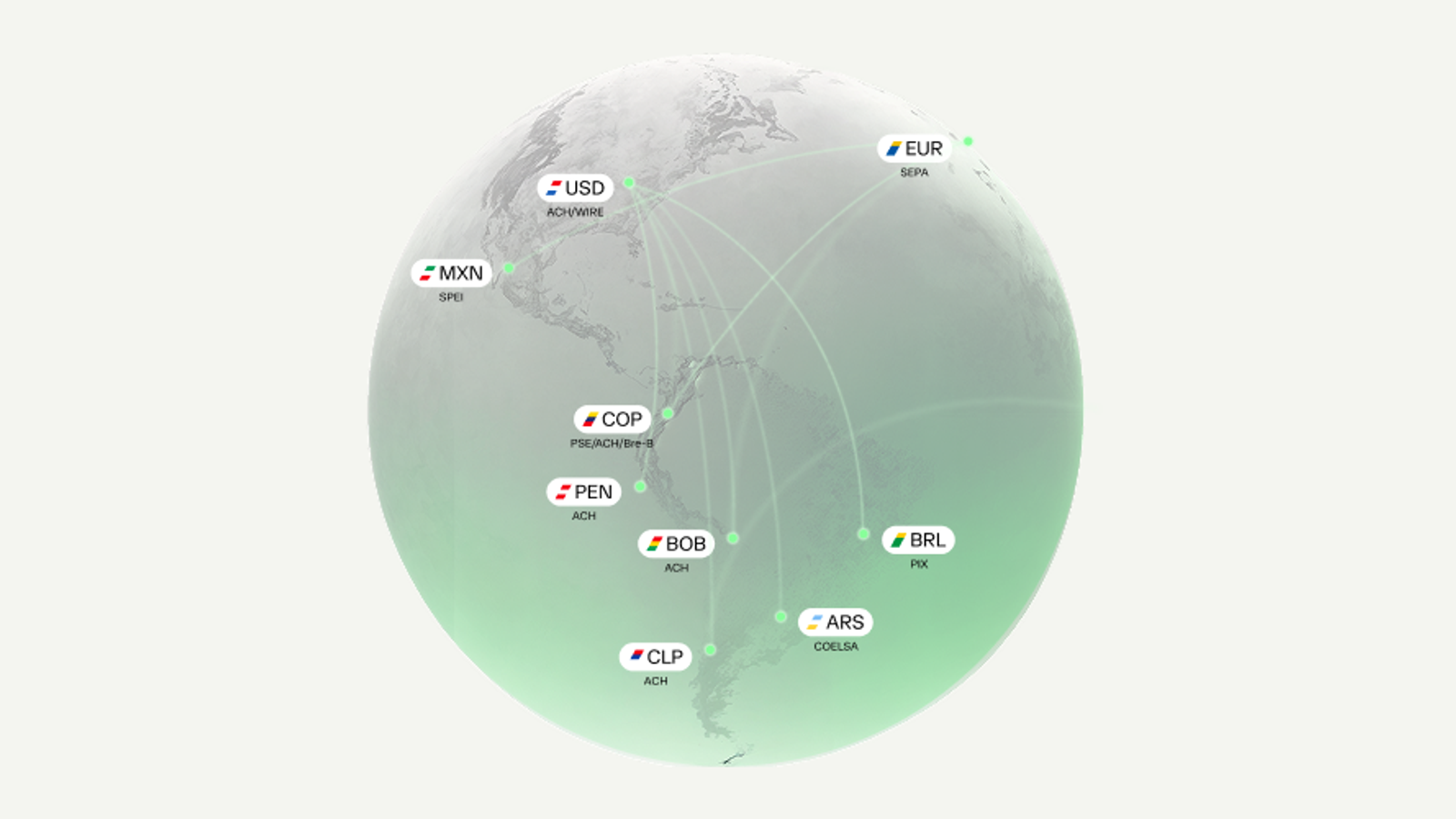
Yes, through a regional provider. VelaFi’s latam payment solutions support CVU in Argentina and Yape and CCI in Peru, alongside SPEI in Mexico and Pix in Brazil, so each cross-border payment in Latin America can settle on a local rail.