8 Best dLocal Alternatives and Competitors in 2026

dLocal supports local payment acceptance, international payouts, and cross-border settlement across emerging markets. Businesses may look at alternatives when they want published rates for a specific market, multi-currency balances alongside collections, online and in-person acceptance on one platform, or a provider focused on recurring supplier payments.
According to PaymentGenes' 2026 research, 84% of 58 surveyed enterprise merchants were considering switching payment service providers or keeping the option open, while 83% cited integration complexity as a barrier to switching. Businesses comparing dLocal alternatives should therefore consider integration requirements alongside coverage, costs, and settlement options.
This article compares eight dLocal alternatives and competitors in 2026, covering their features, pricing approaches, integrations, and best-fit business needs.
Key Takeaways
- dLocal alternatives cover different payment needs: EBANX and Stripe focus on merchant acceptance, while Nium specializes in international payouts and XTransfer serves trade-related payments. Their suitability depends on which dLocal functions a business needs to replace.
- Local collection and settlement have separate requirements: A provider may support domestic payment methods while placing different conditions on payout currencies, account access, or local business registration.
- Replacing a provider can affect existing payment workflows: API connections, beneficiary records, refunds, and reconciliation processes may need to be updated or tested before moving live transactions.
- Payment costs depend on the route and service: Processing fees, foreign exchange (FX) margins, and payout charges vary by market, currency, and provider. The total cost of a payment route can therefore differ from its advertised transaction fee.
- VelaFi supports recurring payments between Latin America (LATAM) and Asia: VelaFi connects supported local payment methods with currency conversion, international transfers, and APIs, so businesses can send and receive B2B payments in local currency on supported routes.
How We Evaluated the dLocal Alternatives
The eight providers cover different parts of dLocal's payment offering. EBANX, Rapyd, Adyen, and Stripe are evaluated primarily for merchant payment acceptance, while VelaFi, Airwallex, Nium, and XTransfer are considered for payouts, account operations, or B2B transfers. Some providers offer services in both categories.
The comparison uses six criteria to assess their suitability for different business needs:
- Payment capabilities: Merchant collections, international payouts, and B2B transfers
- Regional coverage: Supported markets, payment corridors, and domestic payment methods
- Settlement options: Funding currencies, FX conversion, and recipient payment arrangements
- Account and treasury services: Receiving accounts, currency balances, and fund management
- Integrations and reporting: APIs, webhooks, transaction records, and payment workflows
- Pricing structure: Published fees, custom commercial terms, and applicable service charges
8 Best dLocal Alternatives and Competitors
The table summarizes each provider's best use case, standout capability, and pricing:
| Provider | Best For | Why It Stands Out | Pricing |
|---|---|---|---|
| VelaFi | Businesses managing recurring B2B payments between LATAM and Asia | Connects LATAM payment rails with FX, cross-border business transfers, and API-based payment management | Custom pricing based on agreed services and payment requirements |
| EBANX | International merchants accepting payments in emerging markets | Supports local payment methods, installment processing, and recurring collections, including Pix Automático in Brazil | Merchant-specific commercial terms; no standard public rate confirmed |
| Rapyd | Platforms collecting customer payments and disbursing funds internationally | Uses virtual accounts and wallets to manage collections alongside payment processing and payouts | Interchange++ card acquiring and country-specific rates; other services quoted individually |
| Adyen | Marketplaces splitting seller payments, and software platforms taking online and in-person payments | Combines acquiring, payment processing, and allocation of funds to platform balance accounts | Fixed processing fee plus payment-method fee; other products priced separately |
| Stripe | Online businesses and software platforms embedding payment functionality | Offers checkout, recurring billing, and configurable fund flows through Stripe Connect | Mexico: 3.6% + MX$3.00 per domestic online card transaction; an additional 0.5% for international cards and 2% if currency conversion is required |
| Airwallex | Companies managing foreign-currency balances and overseas supplier payments | Brings multi-currency accounts, FX, international transfers, and expense management together | US FX pricing: 0.5% above interbank for major currencies, 1% for others; additional fees vary |
| Nium | Fintechs and enterprises integrating international payout services | Supports local fiat delivery, beneficiary verification, and USDC-funded payouts | Custom commercial pricing; no standard public payout-rate schedule |
| XTransfer | Importers and exporters handling international trade payments | Provides overseas collection accounts, currency conversion, and supplier transfers | Free account opening and maintenance; eligible external bank transfers from $2 |
Published rates apply to specific products and markets. Actual costs depend on the payment method, currency, destination, and commercial agreement.
Managing B2B payments between LATAM and Asia? VelaFi connects local payment rails with FX and cross-border settlement. Talk to our team to explore supported payment routes.
1. VelaFi
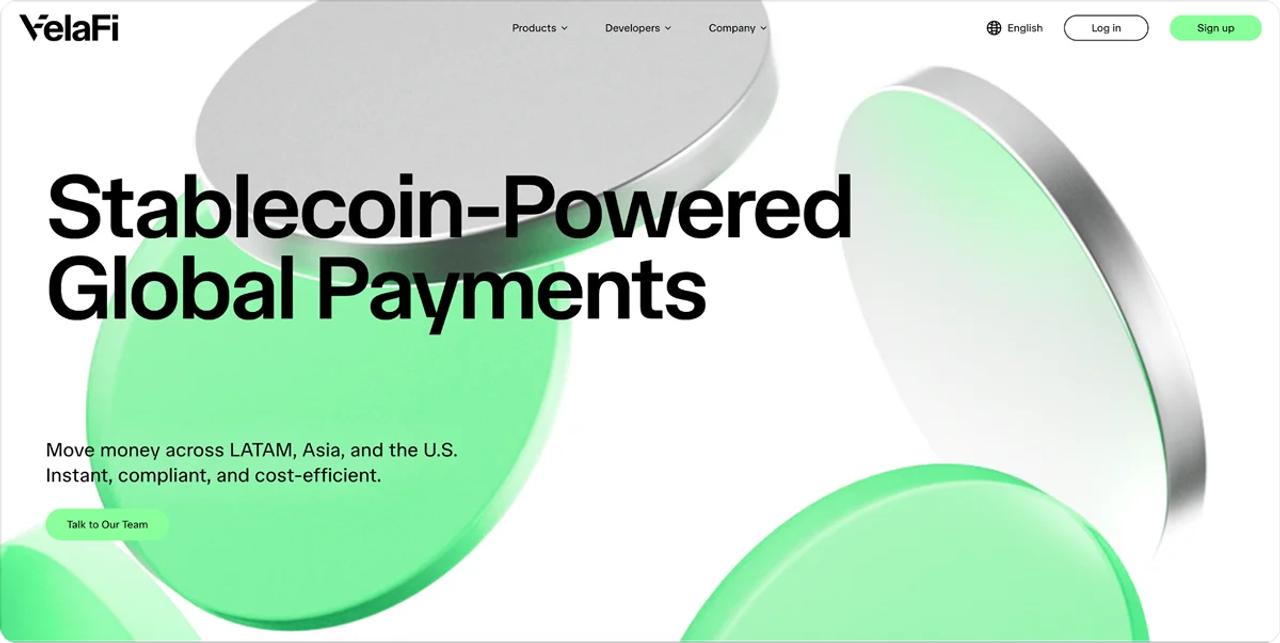
VelaFi connects local LATAM payment methods with international B2B transfers on supported routes. It holds ISO 27001 certification and has completed a SOC 2 Type II audit.
Where dLocal covers a broad range of emerging markets, VelaFi focuses on LATAM–Asia business flows and combines foreign exchange, multi-currency accounts, treasury tools, and APIs.
Key Features
- Local payment infrastructure: Supports eligible transfers through SPEI in Mexico and Pix in Brazil, transfers to CVU-linked accounts in Argentina, and Bre-B and ACH-based transfers in Colombia, alongside CHATS payouts in Hong Kong and supported SWIFT payouts to Asia
- Currency conversion: Provides FX services for supported currencies and business payment routes
- API and reporting: REST APIs, webhooks, and transaction records support integration, payment tracking, and reconciliation
- Compliance controls: Applies Know Your Business (KYB) onboarding, anti-money laundering (AML) screening, and transaction monitoring
Who It's Best For
For finance teams paying suppliers in Asia or collecting revenue in LATAM, VelaFi connects local collections, currency conversion, and international payouts through one integration.
2. EBANX
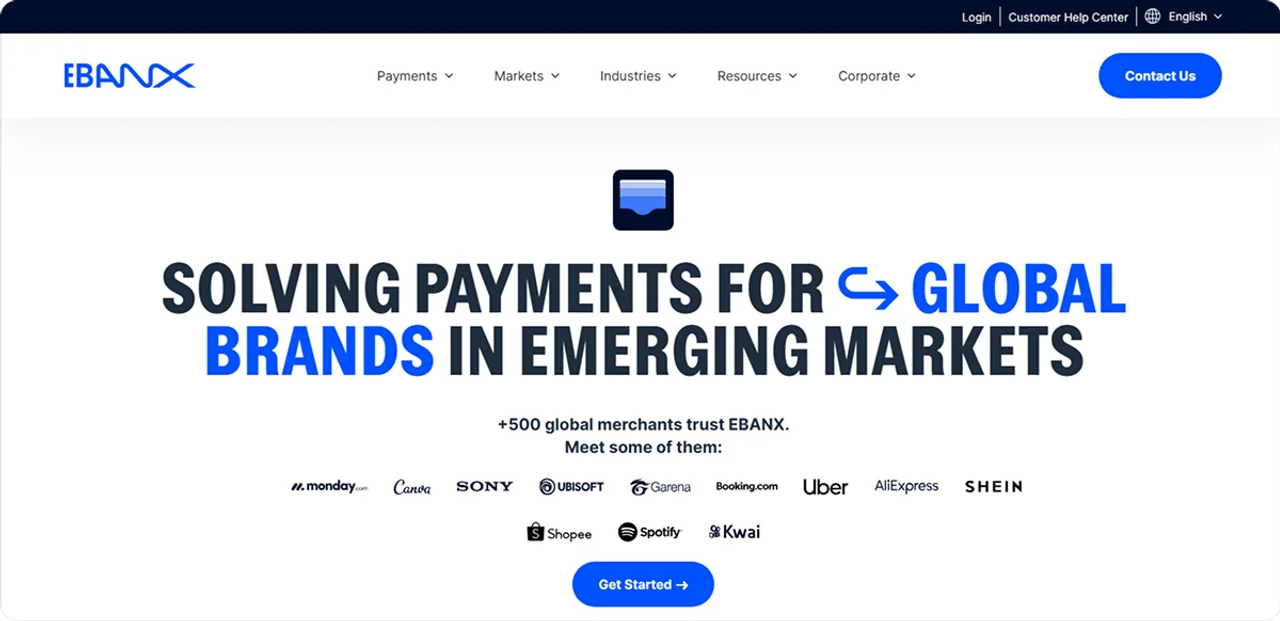
EBANX serves merchants selling into LATAM and other emerging markets. Both EBANX and dLocal support Pix Automático, so businesses should compare their checkout integrations, installment arrangements, and commercial terms rather than recurring Pix availability alone.
It offers direct APIs, hosted payment pages, and payment links. Its documented local payout model requires a local entity and local-currency funding, while eligible cross-border payouts can be USD-funded.
Key Features
- Regional payment methods: Supports Pix in Brazil, India's Unified Payments Interface (UPI), and country-specific cards, bank transfers, and digital wallets
- Installment payments: Processes eligible local card installments under merchant- or issuer-managed interest arrangements
- Recurring collections: Supports authorized recurring charges through eligible payment methods, including Pix Automático in Brazil
- Merchant payouts: Sends individual or bulk payments to supported bank accounts and digital wallets
Who It's Best For
An international subscription merchant entering Brazil may prioritize recurring payment authorization and local checkout methods over multi-currency account services. EBANX addresses these collection requirements through supported methods such as Pix Automático and local card payments.
3. Rapyd

Rapyd links virtual receiving accounts, available in markets including Mexico and Singapore, to a Rapyd Wallet. For businesses moving bank-transfer collections from dLocal, several virtual accounts can feed one wallet, which Rapyd says makes incoming payments easier to identify.
Virtual accounts can be issued through APIs, with status webhooks supporting integration and account monitoring.
Key Features
- Rapyd Collect: Accepts cards, bank transfers, electronic wallets, and selected cash-based payment methods
- Rapyd Disburse: Processes individual and bulk payouts through supported banks, cards, and other recipient methods
- Currency conversion: Allows supported incoming funds to be converted into an available settlement currency
Who It's Best For
Marketplaces receiving bank transfers from numerous customers can use Rapyd's virtual-account structure to associate each transfer with the customer who sent it. Finance teams can then match receipts to orders before disbursing funds to sellers.
4. Adyen
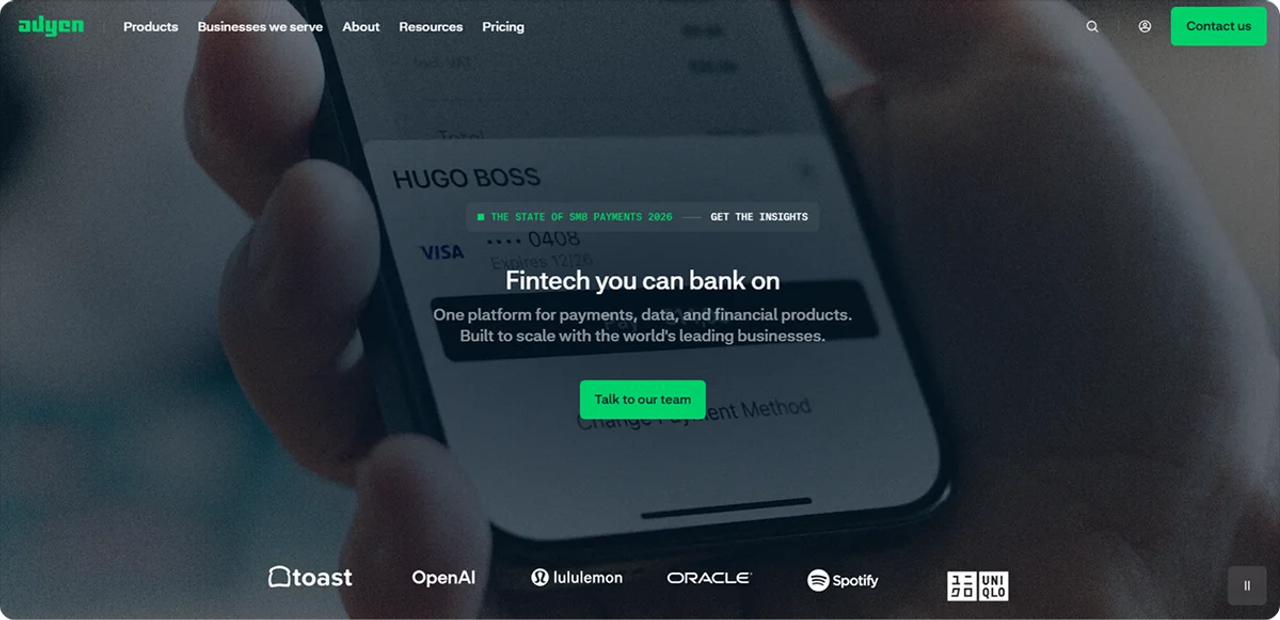
Adyen for Platforms allows businesses to allocate payment proceeds and fees across multiple balance accounts using predefined rules or transaction-specific instructions.
While dLocal also offers marketplace payment splitting, Adyen combines online and in-person acquiring with platform balance management. Businesses can integrate through APIs or supported commerce plugins.
Key Features
- Unified commerce: Processes online and in-person transactions through connected merchant infrastructure
- Local payment methods: Accepts Pix in Brazil, OXXO in Mexico, international cards, and digital wallets; Adyen requires a local Brazilian entity for Pix acceptance
- Platform onboarding: Provides verification and account setup tools for merchants and service providers
- Risk management: Includes transaction screening and payment fraud management tools
Who It's Best For
Adyen fits marketplaces that need to split payments between sellers and control when each is paid out, as well as software platforms whose users take payments both online and in person.
5. Stripe
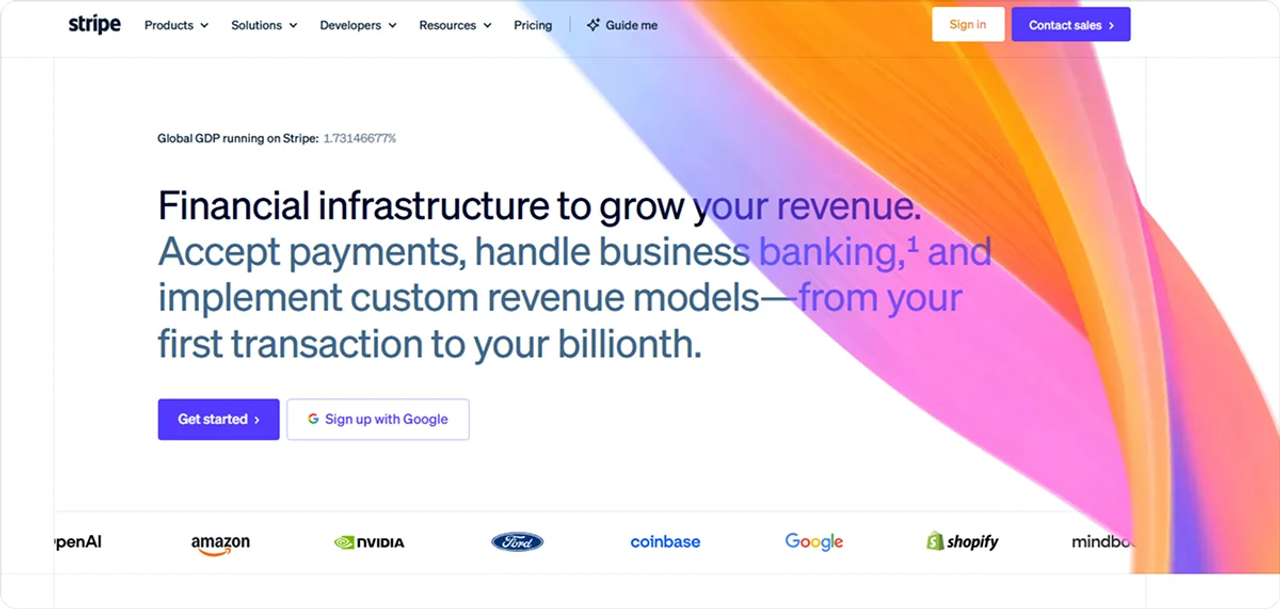
Stripe Connect supports embedded seller onboarding, fund routing, and dispute management for marketplaces.
dLocal specializes in emerging markets, while Stripe is built around developer-led checkout and subscription workflows, supported by APIs, software development kits (SDKs), and webhooks.
Key Features
- Stripe Payments: Accepts cards, digital wallets, and eligible local methods through hosted or integrated checkout
- Stripe Billing: Supports subscriptions, recurring invoices, and automated billing operations
- Global payouts: Enables eligible businesses to send international disbursements through supported Stripe products
- Developer tools: Offers APIs, SDKs, and webhooks for integrating payment functionality into software applications
Who It's Best For
Software businesses building payment functionality into their own platforms can use Stripe Connect to manage connected accounts, payment routing, refunds, and disputes. Its developer tools give engineering teams control over how these processes work within their applications.
6. Airwallex
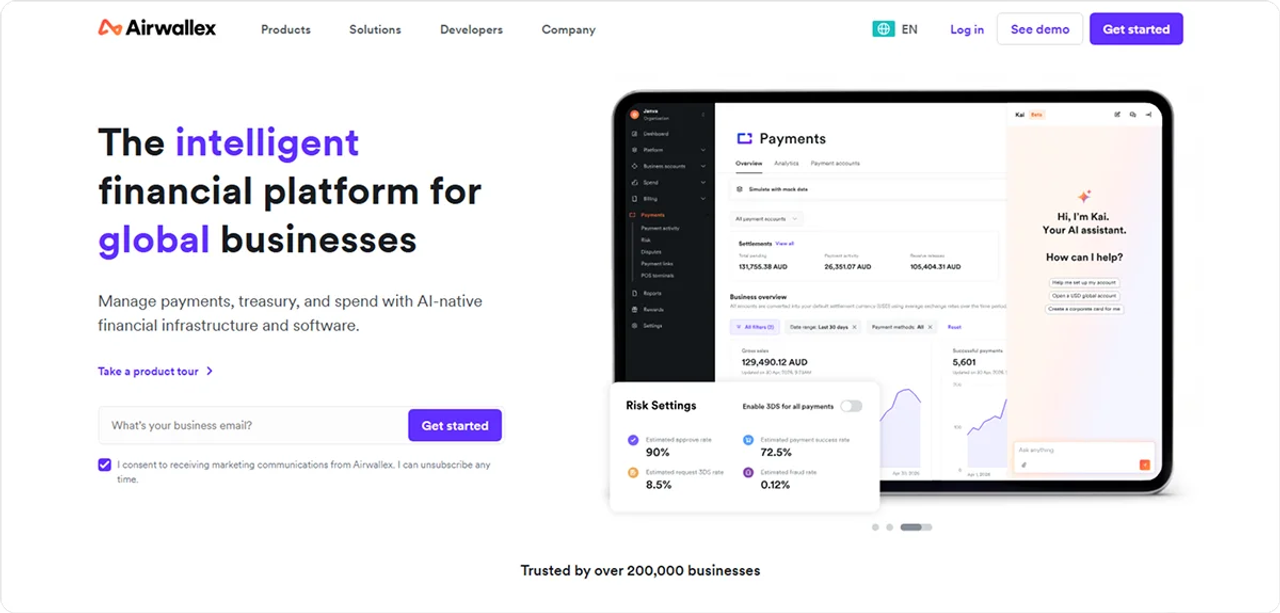
Airwallex provides multi-currency accounts for businesses receiving overseas revenue and making international payments.
For companies using dLocal mainly for collections and payouts, Airwallex adds foreign-currency balances and expense management on the same platform. Its Global Accounts can be managed through APIs, with webhooks supporting account activity notifications.
Key Features
- Global Accounts: Provides eligible businesses with local receiving details in supported markets, including Mexico, Singapore, Hong Kong, and the US
- International transfers: Routes outgoing payments through available domestic clearing systems and international networks
- FX conversion: Exchanges supported currency balances using the applicable rates and commercial terms
- Payment acceptance: Processes cards and local payment methods through checkout integrations and payment links
- Expense management: Offers corporate cards, employee spending controls, and tools for managing business bills
Who It's Best For
A company receiving revenue in several currencies while paying overseas suppliers may benefit from Airwallex's account-based model. Eligible currency balances can be retained for future transfers or business expenses instead of being converted immediately after collection.
7. Nium
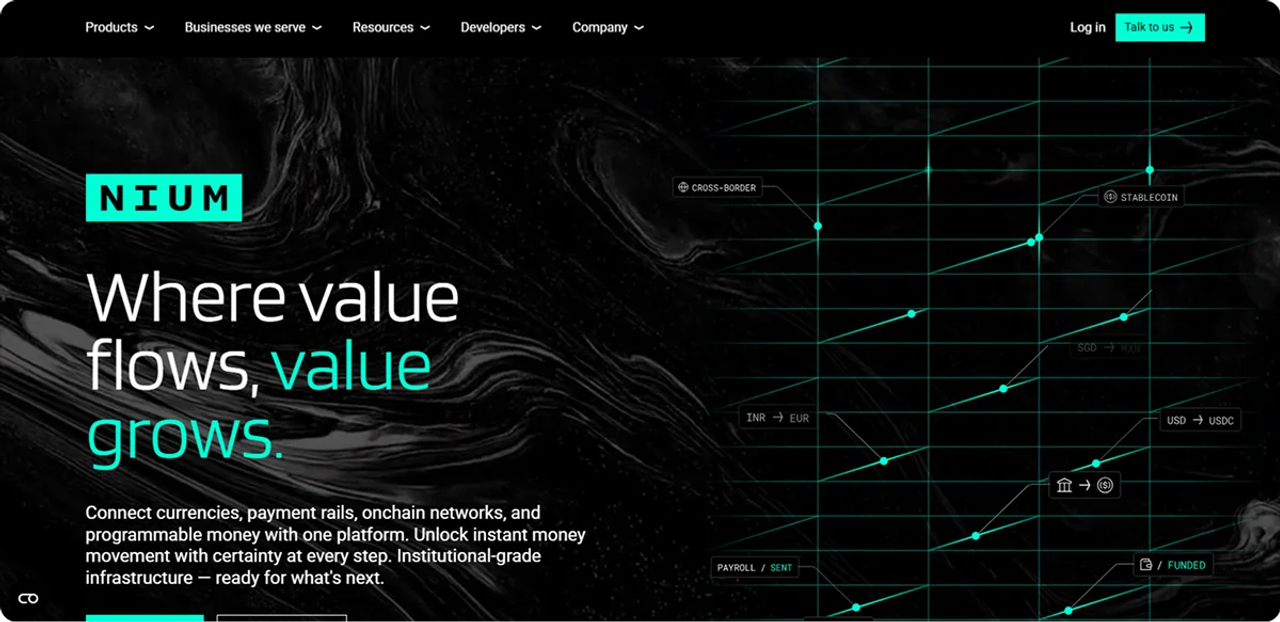
Nium provides API-based international payouts, including an eligible USDC funding option converted to USD before local fiat delivery.
Businesses evaluating dLocal primarily for international disbursements can also consider Nium's embedded payout infrastructure and beneficiary-verification tools.
Key Features
- Cross-border payout API: Initiates international transfers through a unified technical connection
- Local delivery methods: Supports payouts to eligible bank accounts, cards, and digital wallets across international markets, including India and Singapore
- Multi-currency accounts: Provides services for collecting, holding, and converting supported currencies
- Beneficiary verification: Checks recipient account details before initiating eligible transfers
Who It's Best For
Enterprises and platforms such as payroll providers, contractor-payment services, and fintechs can integrate Nium's international payout capabilities into existing applications. Its API model lets recipient verification and payment-status information feed into established operational workflows.
8. XTransfer
XTransfer offers receiving accounts, foreign exchange, and supplier payments for importers and exporters.
XTransfer's scope is narrower than dLocal's, focusing on trade invoices and eligible collections in BRL and MXN.
Key Features
- Global business accounts: Provides receiving accounts for international trade payments in multiple currencies
- Local-currency collection: Supports eligible domestic-currency receipts, including BRL and MXN
- Supplier payments: Sends international bank transfers to business beneficiaries, including eligible suppliers in Asia
- Currency exchange: Converts supported currencies for overseas collections and outgoing payments
- Account transfers: Allows eligible XTransfer users to transfer funds between their accounts without additional transfer fees
Who It's Best For
XTransfer's trade-oriented accounts fit importers and exporters handling repeat invoices with overseas trading partners. Businesses can collect eligible payments from international buyers, manage currency conversion, and arrange subsequent supplier transfers through supported routes.
Read more: 6 Best XTransfer Alternatives to Use in 2026 [Comparison]
Why Choose VelaFi for LATAM–Asia Business Payments
Companies replacing dLocal for supplier payments may need more than merchant checkout processing. VelaFi's local rails, including SPEI in Mexico and Pix in Brazil, support recurring B2B payment operations between LATAM and Asia.
In January 2026, VelaFi joined Circle Payments Network, which connects participating financial institutions for cross-border settlement. Membership adds another settlement route alongside VelaFi's local payment rails.
Contact VelaFi to discuss supported markets, payment routes, beneficiary requirements, and commercial terms.
FAQ
1. Can I switch from dLocal without interrupting customer payments?
You can reduce the risk of interruptions, but a disruption-free migration cannot be guaranteed. Running both providers during testing and moving transactions gradually can limit operational problems.
2. What data do I need to migrate when switching from dLocal?
Beneficiary details, transaction records, and reconciliation data may need to be exported. API credentials, webhooks, and payment configurations generally need to be set up again with the new provider.
3. Can I transfer saved customer cards and subscriptions to another payment provider?
Sometimes, but stored card tokens may not be transferable between providers. Ask both providers about secure token migration before moving recurring payments to avoid requiring customers to re-enter their card details.
4. Will I need new local bank accounts when replacing dLocal?
Not necessarily. Some cross-border payment arrangements do not require separate local bank accounts, but local entity and funding requirements may still apply. For example, EBANX requires a local entity for local payouts.
5. How long does it take to migrate from dLocal to another provider?
There is no fixed migration timeline. The duration depends on technical integration, compliance onboarding, payment-method activation, and any required migration of stored payment credentials.
Editorial disclosure: VelaFi publishes this article and is one of the providers reviewed. The comparison is intended to support an initial shortlist, not provide independent financial, legal, tax, or regulatory advice.
Methodology and limitations: We reviewed public, primarily first-party product and pricing information available as of October 12, 2026. Products, fees, eligibility, regulated entities, partner arrangements, and payment routes can vary by country and customer profile. We did not open accounts, execute test transactions, or obtain like-for-like quotes from every provider. Confirm current terms directly before making a decision.
Sources:
- PaymentGenes, “PSP Switching Strategy: When Should Enterprise Merchants Stay, Switch or Layer?”, accessed 2026
- VelaFi, “VelaFi Payment Rails — Pricing & Coverage,” accessed 2026
- VelaFi, “VelaFi Joins Circle Payments Network,” 2026
- VelaFi, “VelaFi Achieves SOC 2 Type II Compliance,” 2026
- VelaFi, “VelaFi Achieves ISO 27001 Certification,” 2025
- dLocal, “Brazil / Pix Automático,” accessed 2026
- dLocal, “FAQs: Payments in Emerging Markets,” accessed 2026
- EBANX, “EBANX API Ecosystem,” accessed 2026
- EBANX, “Payouts Overview,” accessed 2026
- Rapyd, “Issue Virtual Account to Wallet,” accessed 2026
- Rapyd, “Rapyd Pricing,” accessed 2026
- Adyen, “Process Payments,” accessed 2026
- Adyen, “Pix,”, accessed 2026
- Stripe, “Pricing & Fees (Mexico),” accessed 2026
- Airwallex, “Global Accounts,” accessed 2026
- Nium, “Stablecoin Payouts,” accessed 2026
- XTransfer, “Global Payout,” accessed 2026