8 Best BVNK Alternatives to Choose in 2026 [Comparison]

BVNK combines fiat and stablecoin payments, virtual accounts, wallets, conversion, and APIs for businesses moving money across multiple markets. The right alternative usually comes down to the currencies, local rails, and account structures a company actually needs.
Mastercard completed its acquisition of BVNK in August 2026. BVNK said existing customers could continue using the same products, integrations, service, and support, but the acquisition adds useful context for businesses comparing providers in 2026.
A 2026 PaymentGenes survey of 58 enterprise merchants found that 84% were considering switching payment service providers or keeping the option open. Rising costs, product gaps, limited flexibility, and global expansion requirements were among the factors influencing these decisions. The findings concern payment service providers broadly, rather than BVNK or stablecoin providers specifically.
This article compares eight BVNK alternatives and explains how their payment models and best-fit use cases differ.
Key Takeaways
- BVNK alternatives are not all direct replacements: Some providers overlap with BVNK across payments, accounts, and stablecoins, while others focus more heavily on trade payments, APIs, treasury, or local payout infrastructure.
- Stablecoins do not always change the recipient experience: Some providers use stablecoins for conversion or settlement while supported payments still begin or end in local fiat.
- The right provider needs to fit existing finance and product workflows: Integration, reconciliation, account structure, FX, and regulatory setup can matter more than headline pricing, which is often quoted rather than published.
- Regional fit can be as important as feature breadth: VelaFi is particularly relevant for recurring LATAM–Asia payment flows, combining local LATAM rails, cross-border settlement, and APIs, backed by independently assessed security controls.
How We Evaluated the BVNK Alternatives
The eight providers overlap with BVNK to different degrees. Some cover much of the same payment stack, while others specialize in particular infrastructure layers, regions, or business use cases.
The comparison uses the following criteria, although the level of public detail varies by provider:
- Cross-border payment capabilities: Business flows such as international collections, payouts, and settlement
- Fiat infrastructure: Local and international rails, fiat funding options, payout methods, and currency conversion
- Stablecoin support: Stablecoins, blockchain networks, on-ramp and off-ramp options, and settlement models
- Geographic coverage: Countries, currencies, and corridors where relevant services are available
- Accounts and treasury: Virtual or named accounts, wallets, balances, liquidity, custody, and treasury functions
- APIs and integrations: Payment, account, reconciliation, reporting, and other functions available through integrations
- Regulatory structure: Entities, licenses, registrations, authorizations, or regulated partners involved in providing the service
8 Best BVNK Alternatives
The table summarizes each alternative's typical fit, model, and pricing approach:
| Provider | Typical Fit | What Differentiates the Model | Pricing |
|---|---|---|---|
| VelaFi | Businesses moving funds across LATAM and Asia | Connects local LATAM rails with fiat/stablecoin conversion, cross-border settlement, treasury functions, and APIs | Service- and route-specific charges; withdrawal fees and FX terms depend on the transaction |
| XTransfer | Importers and exporters handling recurring international trade payments | Builds collections, FX, and supplier payments around B2B trade rather than a stablecoin-led model | Account opening and maintenance are free; some payouts start at $2, while certain local-currency routes use percentage-based fees |
| Conduit | Fintechs, PSPs, and finance teams combining fiat and stablecoin transfers | Brings multi-currency accounts, banking rails, stablecoins, and international payouts into the same payment environment | Customer-specific pricing in the order form; transfer fees depend on the service |
| Merge | Fintechs and marketplaces that need traceable accounts and payment flows | Places named accounts and reconciliation alongside local fiat rails and stablecoin settlement | Published stablecoin payment pricing is 0.1%–0.5% per transaction |
| Fipto | European companies managing fiat and stablecoin treasury activity | Combines accounts, conversion, payments, and treasury services under French Payment Institution and MiCA crypto-asset service provider authorizations | Pricing varies by product; Fipto Receive lists a 0.9% payer fee, with volume-based discounts |
| Due | Platforms that need several local payout methods across different regions | Connects stablecoin settlement with bank transfers, virtual accounts, mobile money, and digital wallets | Pricing is volume-based, with lower fees at higher volumes and custom quotes based on expected activity |
| Sphere | Product and engineering teams building programmable payment flows | Concentrates on APIs for conversion, on-ramp and off-ramp flows, reconciliation, and compliance-related payment workflows | Pricing can depend on transaction volume, asset value, or another metric agreed in the contract |
| Noah | Platforms connecting bank-funded stablecoin flows with local fiat delivery | Combines virtual accounts, on-ramps, automated off-ramps, and multi-market payout infrastructure | Transaction pricing is calculated during the payment flow, with an estimate available before execution |
1. VelaFi
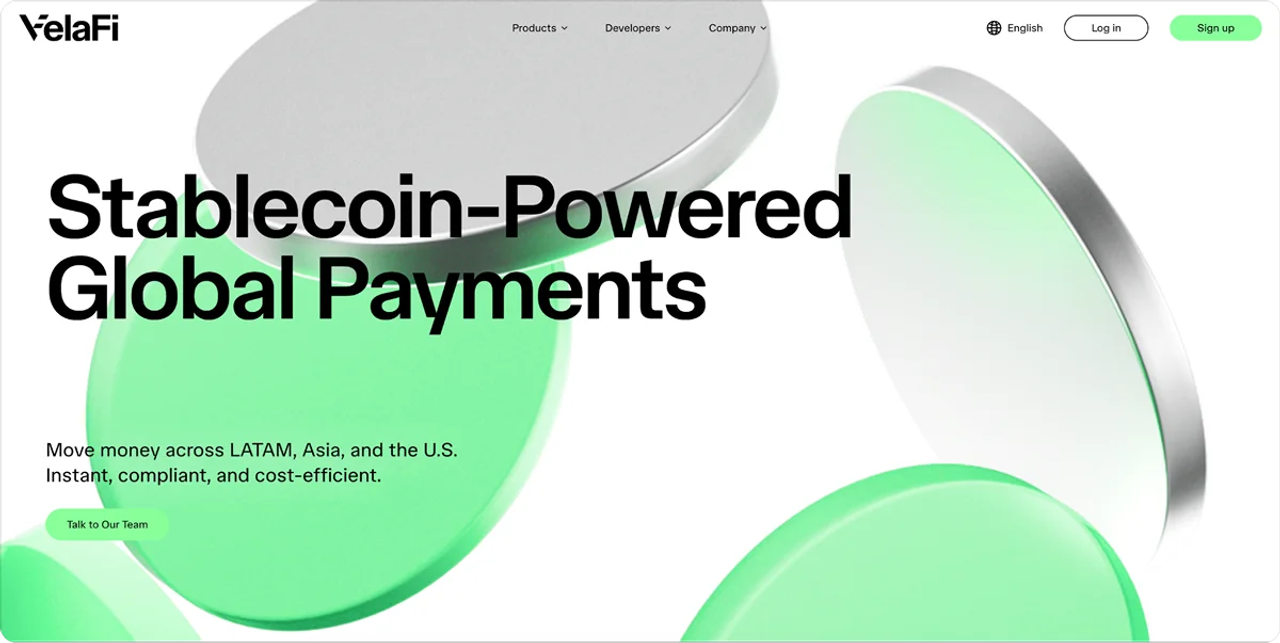
VelaFi connects local payment rails with stablecoin-enabled cross-border settlement for businesses operating across LATAM and Asia. VelaFi is ISO 27001 certified and has completed a SOC 2 Type II audit.
Key Features
- Local fiat access: VelaFi connects supported LATAM markets to local rails including SPEI, Pix, and Bre-B, wallets such as Nequi and Yape, and account identifiers including CVU and CCI for relevant collection and payout flows.
- Stablecoin settlement: Global Payment connects local payment systems with USDC settlement, allowing supported transactions to begin and finish in fiat.
- Treasury functions: Multi-currency accounts, FX conversion, liquidity operations, and stablecoin capabilities let businesses manage balances and conversions alongside international payments.
- Payment visibility: Global Payment separates transaction status into pay-in, pay-out, and funds-received stages, and issues a receipt once the payment completes.
- API access: VelaFi APIs connect payment instructions, status updates, transaction data, and supported account functions with internal finance or product systems.
The main difference from BVNK is regional emphasis: VelaFi centers its published offering on LATAM–Asia flows and local LATAM rails.
Who It's Best For
VelaFi fits import/export companies, fintechs, PSPs, e-commerce businesses, and logistics firms managing recurring cross-border payments and local-currency requirements across multiple markets.
It is especially useful for businesses that would otherwise maintain separate country-level providers for collections, conversion, and payouts.
2. XTransfer
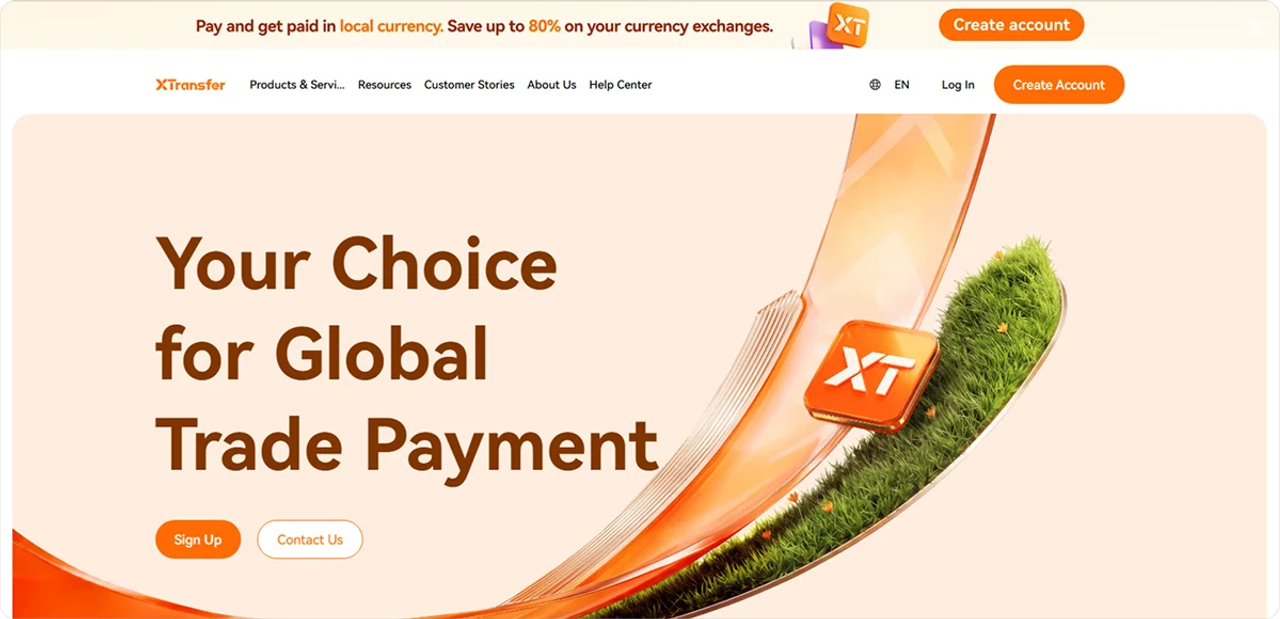
XTransfer approaches cross-border payments through the requirements of international B2B trade.
Collections, currency conversion, and supplier payments sit within the same platform, bringing the main stages of an international trade-payment workflow together.
Key Features
- Local collections: XTransfer supports local-currency collection through domestic networks in roughly 60 countries and regions, alongside bank-account receipts from more than 200 markets.
- Global accounts: Business accounts support multiple major currencies and bring international receipts and outgoing payments into the same account environment.
- Supplier payouts: Businesses can send funds to their own or third-party commercial accounts across more than 200 countries and regions, with CNY settlement available for eligible Chinese supplier payments.
- 24/7 FX: Market orders convert at the live rate at any hour, while limit orders trigger automatically when a selected exchange rate is reached.
- API integration: Account and payment functions can connect with business systems through XTransfer's APIs, reducing reliance on manual dashboard-based workflows.
XTransfer is more trade-workflow-led than BVNK, focusing on collections, FX, and supplier payments for importers and exporters.
Who It's Best For
XTransfer is particularly relevant to importers and exporters that collect funds internationally and use those balances for overseas supplier payments, including eligible payments to China.
Read more: Best XTransfer Alternatives
3. Conduit
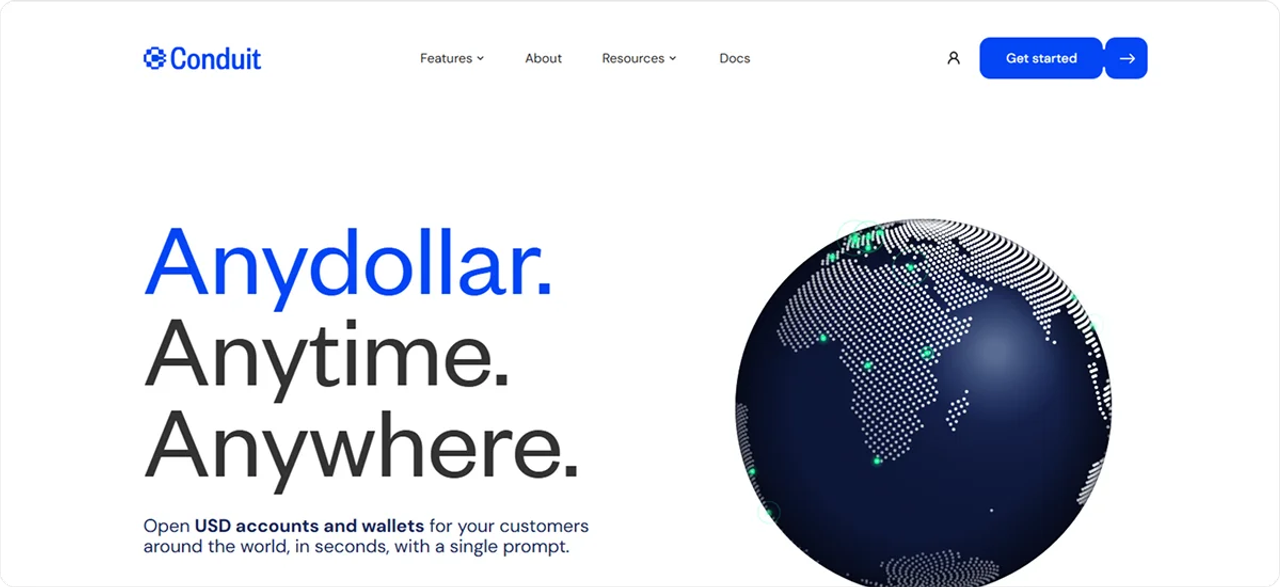
Conduit combines stablecoin settlement with fiat accounts and banking rails for B2B payments.
Its web application and API bring funding, conversion, account management, and payout execution into the same operating environment.
Key Features
- On-ramp and off-ramp routes: Flows move between fiat currencies such as USD, MXN, and BRL and stablecoins including USDC and USDT.
- Multi-currency accounts: Conduit provides account infrastructure in the customer's name, including USD balances.
- Named collections and payouts: Accounts can receive named collections and make payouts across fiat currencies and stablecoins, making incoming funds easier to attribute.
- Transaction visibility: Account tools show processed and pending transactions, giving finance teams a consolidated record of balances, deposits, and transfers.
- API and web access: Multi-currency account functions are available through both Conduit's web application and API, supporting operational and embedded use cases.
Conduit's offering centers on named accounts, conversion, treasury operations, and cross-border payout execution.
Who It's Best For
Conduit suits fintechs, PSPs, and finance teams that need named account infrastructure, treasury operations, and cross-border payouts in one environment.
4. Merge
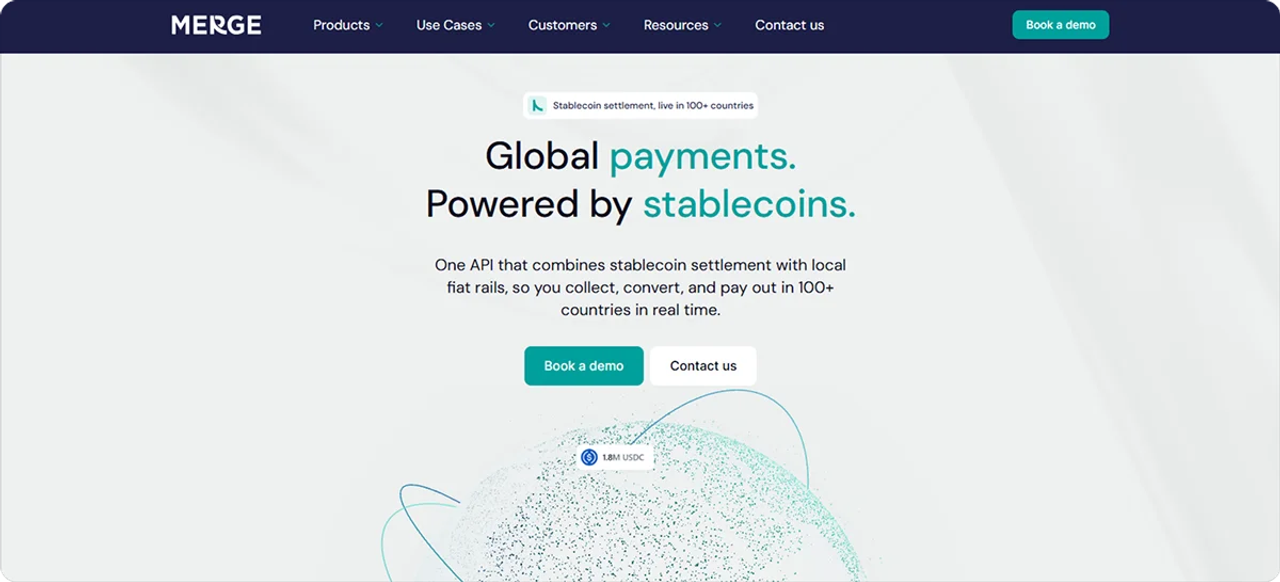
Merge brings multi-currency accounts and stablecoin settlement into a single B2B payment stack. Local collection rails, conversion, and payout functions sit alongside its account infrastructure within the same payment environment.
Key Features
- Multi-currency accounts: Businesses can receive, hold, and send more than 60 currencies, with EUR, GBP, and USD account infrastructure available through one API or dashboard.
- Named EUR IBANs: Dedicated IBANs can be issued in an end customer's name and support both incoming and outgoing SEPA payments.
- Fiat-stablecoin conversion: On/off-ramp functionality connects fiat funding and local rails with stablecoin networks inside the same transaction flow.
- Local payment rails: Merge supports collection and payout infrastructure through systems including ACH, SEPA, Pix, Faster Payments, and UPI.
- Automated reconciliation: One-to-one account mapping, sub-accounts, transaction records, and webhooks reduce the need to manually match pooled payments.
Merge differentiates through named account structures and account-level reconciliation for platforms handling many end customers or merchants.
Who It's Best For
Merge works well for platforms with many end customers or merchants when manually matching pooled incoming payments creates a significant reconciliation burden.
5. Fipto
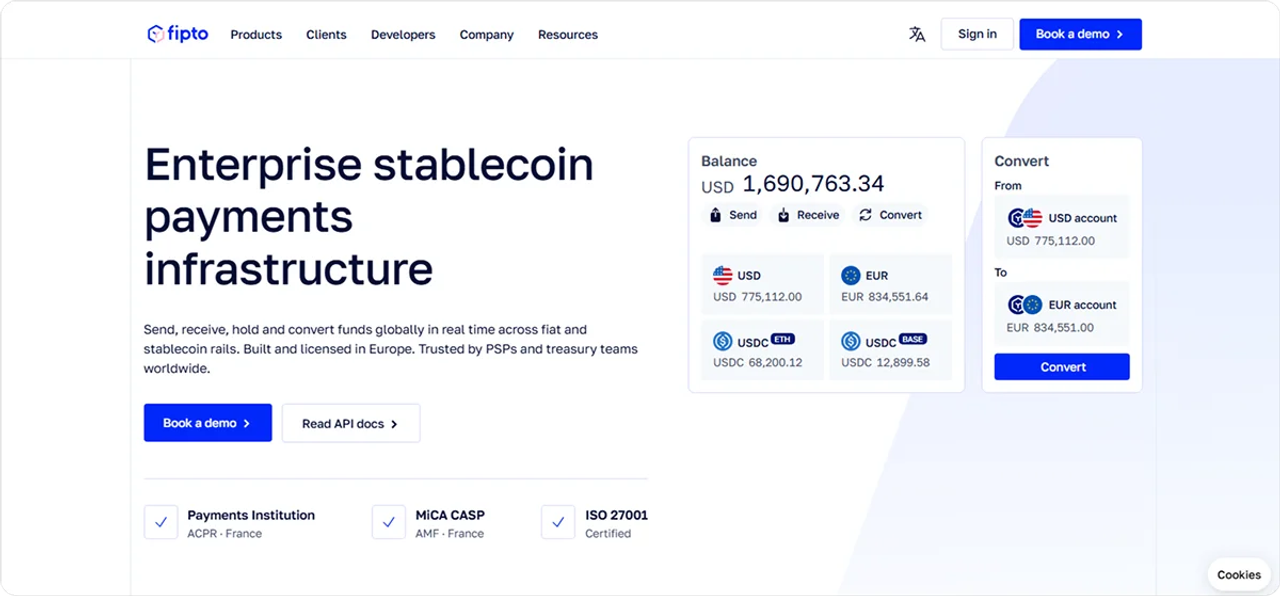
Fipto combines fiat payment services and stablecoin capabilities within a European payments and digital-asset regulatory framework.
Accounts, conversion, and payments operate across the same platform, with access through APIs, a web interface, and integrations with existing treasury-management systems.
Key Features
- Named accounts: Fipto supports named EUR and USD accounts, with SEPA for EUR payments and SWIFT for USD payments.
- Fiat-stablecoin conversion: Businesses can convert between fiat currencies and stablecoins within the same account environment.
- Treasury operations: Businesses can manage fiat balances, stablecoin wallets, conversion, payments, and approval workflows from a single interface.
- Developer access: Fipto provides API access and sandbox environments, while integrations such as Kyriba connect the platform with existing treasury workflows.
- Regulatory structure: Fipto PI SAS holds a Payment Institution authorization from the Autorité de contrôle prudentiel et de résolution (ACPR) and a crypto-asset service provider (CASP) authorization under MiCA from the Autorité des marchés financiers (AMF).
Fipto's clearest distinction is its European treasury and regulatory focus.
Who It's Best For
Fipto fits European finance and treasury teams that need fiat accounts, stablecoin operations, and regulated payment infrastructure in the same environment.
6. Due
Due links stablecoin settlement with several local payout methods across multiple markets. The available payout route depends on the destination.
Key Features
- Local collection: Businesses can receive funds through rails such as ACH and SEPA, then convert supported fiat into stablecoins within the same integration.
- Global payouts: Due supports payouts across more than 80 markets through local bank rails, mobile money, digital wallets, or stablecoins depending on the destination.
- Virtual accounts: Account details include EUR IBANs, US account and routing numbers, UK sort codes and account numbers, and MXN CLABE account numbers.
- Stablecoin conversion: Its API supports assets including USDC, USDT, and EURC for collection, conversion, and settlement flows.
- Bulk payments: A bulk payout API allows businesses to process multiple payments together, while payout links can give recipients a choice of available delivery methods.
Due's model emphasizes local payout methods, including bank transfers, mobile money, and digital wallets.
Who It's Best For
Due can make sense for platforms serving recipients in markets where a bank account is not always the preferred or available payout destination.
7. Sphere
Sphere takes an API-first approach to fiat and stablecoin payments, with its products built primarily for teams integrating payment and conversion functions into their own systems.
Payment instructions, conversion, reconciliation, and compliance checks can run through the same API layer rather than separate integrations.
Key Features
- Unified API: Sphere lets teams send, receive, convert, and reconcile funds across supported currencies, blockchain networks, and counterparties.
- Automated conversion: Fiat-to-crypto and crypto-to-fiat conversions can run inside the payment workflow rather than through a separate manual process.
- Named on-ramp accounts: Fiat funding flows can use named account infrastructure provided through Sphere's developer toolkit.
- Third-party transfers: Product teams can use Sphere for payments involving external counterparties rather than limiting the API to internal treasury movements.
- Compliance checks: Know your customer (KYC), know your business (KYB), and sanctions screening form part of Sphere's payment and counterparty workflow.
Sphere is more developer-led, with payment, conversion, and compliance workflows exposed primarily through APIs.
Who It's Best For
Sphere suits product teams that want to build payment and conversion logic into their own applications rather than rely mainly on a provider dashboard.
8. Noah
Noah connects fiat bank rails with stablecoin on-ramps and local payouts.
A flow can begin with a bank deposit that converts into a digital asset, or it can move in the opposite direction, from stablecoins into local fiat.
Key Features
- Bank on-ramp: Dedicated EUR or USD virtual accounts can receive fiat deposits and automatically convert them into a supported stablecoin or other cryptocurrency.
- Global payouts: Noah supports payouts in more than 120 fiat currencies across more than 60 countries through its Global Payout product.
- Payout methods: Global Payout can deliver local fiat through bank transfers, real-time payment systems, mobile money, digital wallets, cash pickup, or cards depending on the market.
- Automated off-ramping: Crypto or stablecoin deposits can trigger conversion and fiat payout to a configured local payment method.
- API and webhooks: Noah provides API-based integrations, hosted flows, transaction tracking, and real-time webhook updates for payment and onboarding events.
Noah focuses on automated bank funding, stablecoin conversion, and local fiat payout workflows.
Who It's Best For
Noah suits platforms that repeatedly fund through bank transfers and need automated conversion into stablecoins or local fiat payouts at the other end.
Why VelaFi Stands Out Among BVNK Alternatives
VelaFi's clearest distinction in this comparison is its focus on connecting local LATAM payment infrastructure with cross-border settlement across the LATAM–Asia corridor.
VelaFi entered Japan as a co-organizer of the Stablecoin Settlement Association, an initiative led by Ikuyo to develop standardized stablecoin settlement infrastructure for trade finance.
Its partnership with Nilos extends that connectivity beyond LATAM and Asia. The announcement describes EU and UK settlement, local payouts in African and Middle Eastern markets, and USD clearing through direct and SWIFT rails. Clients should confirm supported corridors and the entity providing each service.
Contact VelaFi to discuss how its cross-border payment infrastructure could support the markets and payment flows your business needs to manage.
FAQ
1. What changed for BVNK customers after the Mastercard acquisition?
BVNK said existing customers could continue using the same products, integrations, service, and support after Mastercard completed the acquisition on August 3, 2026, with no immediate action required.
2. What monthly payment volume does BVNK say it is designed for?
BVNK states that its services are designed for businesses and financial institutions looking to process at least $500,000 per month, with at least six months of operating history.
3. Which stablecoins and blockchain networks does BVNK support?
BVNK supports stablecoins including USDC, USDT, EURC, USDG, and PYUSD across networks such as Ethereum, Solana, Base, Arbitrum, Polygon, BNB Chain, and Tron. Availability varies by asset and jurisdiction.
4. How does BVNK safeguard customer funds?
BVNK keeps e-money separate from company funds in safeguarded accounts. It also tracks customer crypto assets separately from corporate assets and states that it holds the same asset a customer deposited rather than substituting another asset of equivalent value.
Editorial disclosure: This guide is published by VelaFi, one of the providers included in the comparison. The evaluation is based on publicly available product information, documentation, and pricing details reviewed as of October 14, 2026. No independent test transactions were conducted or custom pricing quotes obtained. Features, geographic availability, payment rails, and pricing may vary by product, market, and eligibility.
Sources:
- PaymentGenes (2026). PSP Switching Strategy: When Should Enterprise Merchants Stay, Switch or Layer?
- BVNK (2026). BVNK Joins Mastercard: Building a Network for Every Form of Money
- BVNK (n.d.). Fintech Stablecoin Solution
- BVNK Documentation (2026, updated 12 October). Supported Assets and Networks
- BVNK (n.d.). Global Crypto Compliance
- XTransfer (n.d.). XTransfer: Your Choice for Global Trade Payment
- Conduit (n.d.). Anydollar. Anytime. Anywhere
- Merge (n.d.). Stablecoin Payment Infrastructure for Cross-Border Enterprise Payments
- Fipto (n.d.). Enterprise Stablecoin Payments Infrastructure
- Due (n.d.). Money Beyond Borders
- SpherePay (n.d.). Global Stablecoin Payments API & Dashboard
- Noah (n.d.). Overview: Developer Documentation
- VelaFi (2026). VelaFi Achieves SOC 2 Type II Compliance
- VelaFi (2025). VelaFi Enters Japan to Advance Stablecoin Trade Finance
- VelaFi (2026). Nilos and VelaFi Connect Live Payment Rails Across Asia, Europe, LATAM and the U.S
Note: n.d. indicates an undated source.