7 Bitso Business Alternatives to Choose in 2026 [Compared]

Bitso Business combines local and cross-border payments with FX, treasury, stablecoin infrastructure, and APIs for companies operating across Latin America.
In 2024 surveys conducted in North America, Europe, and Emerging Asia, McKinsey found that 35% to 50% of SMEs had used a fintech or other nontraditional provider for cross-border payments in the previous year. Pricing, access to FX tools, and support for different payout methods were among the factors influencing provider choice.
Still, you may look for a Bitso Business alternative when you need a different mix of payment rails, stablecoin capabilities, account features, or integrations for your payment flows.
This article compares seven Bitso Business alternatives by their main capabilities, geographic focus, best-fit use cases, and pricing approaches.
Key Takeaways
- Local market coverage matters more than headline country counts. Actual availability depends on the payment methods, payout options, and account features offered in each market.
- Stablecoins can remain behind the scenes. Some providers use stablecoins for settlement while senders or recipients continue working in supported fiat currencies.
- Changing providers can require operational migration. Beneficiary data, APIs, webhooks, reconciliation fields, and internal workflows may need to move or be rebuilt.
- VelaFi connects LATAM payment infrastructure with international settlement. VelaFi combines local payment methods, FX, stablecoin settlement, APIs, Mass Payout, and institutional settlement and custody integrations, making it relevant for businesses managing recurring cross-border flows between Latin America and Asia.
How We Evaluated the Bitso Business Alternatives
The providers in this comparison overlap with Bitso Business in different ways. Some focus more on local and cross-border payments, while others emphasize stablecoin solutions or embedded financial services.
The comparison considers the following aspects:
- Payment capabilities: The business payment flows the provider supports, including local and international transfers
- Geographic coverage: The countries and corridors where those services are available
- Local payment methods: The domestic rails and payment systems supported in individual markets
- Fiat and stablecoin support: The role of traditional currencies and stablecoins within the payment flow
- FX and treasury: The available currency conversion, balance, liquidity, and treasury features.
- APIs and integrations: The payment and account functions businesses can connect to their own systems.
7 Best Bitso Business Alternatives
The table below provides a quick overview of seven Bitso Business alternatives, comparing their best-fit use cases, main differentiators, and pricing approaches.
| Provider | Best For | Why It Stands Out | Pricing Approach |
|---|---|---|---|
| VelaFi | Businesses managing recurring payment flows across LATAM and Asia | Connects local LATAM rails with fiat/stablecoin conversion, cross-border settlement, and APIs | Custom pricing based on agreed services and payment requirements |
| BVNK | Businesses and platforms adding stablecoin capabilities to fiat payment flows | Combines stablecoin payments with virtual accounts, wallets, conversion, and embedded payment tools | Contract-agreed fees; charges depend on the service and jurisdiction |
| Bridge | Fintechs and platforms building stablecoin and payment products | Provides API infrastructure for orchestration, wallets, virtual accounts, cards, and stablecoin issuance | Custom pricing available through sales; no standard price list |
| Cobre | Companies managing local payments and treasury operations in Mexico and Colombia | Connects domestic rails with FX, stablecoin flows, APIs, and reconciliation | Product-specific pricing; no Cobre commission on Bre-B transfers, with a separate fee for Rate Lock |
| dLocal | Businesses using stablecoins alongside emerging-market payment infrastructure | Connects stablecoin funding and settlement with 1,000+ local payment methods across 60+ markets | Quote-based pricing for Stablecoin Full; no standard price list |
| Airwallex | Companies managing international payments alongside accounts, FX, and finance operations | Combines accounts, payouts, FX, and APIs, with early-access, API-only USDC payouts on Ethereum | Subscription and transaction-fee pricing, with custom terms for some platform and high-volume use cases |
| XTransfer | Importers and exporters handling recurring international trade payments | Focuses on business accounts, collections, supplier payments, FX, and Asia-linked trade flows | Route-specific pricing with some free services and transaction-based fees |
1. VelaFi
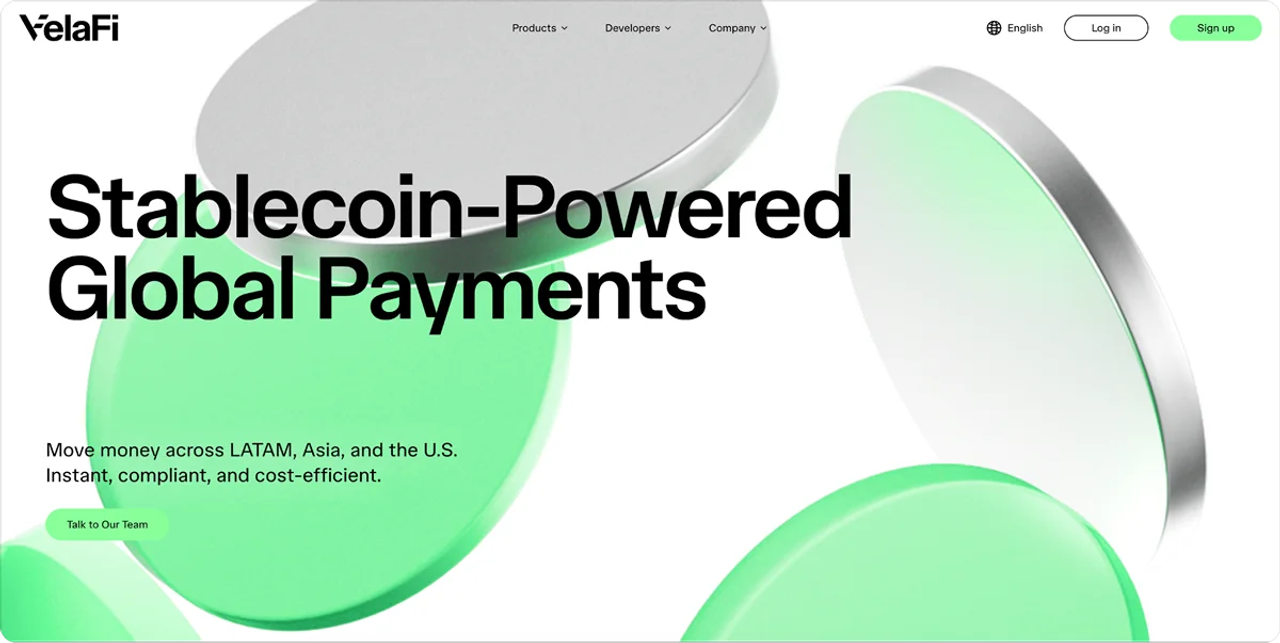
VelaFi is a stablecoin-powered financial infrastructure platform focused on business payment flows across Latin America and Asia. VelaFi is also ISO 27001 certified and SOC 2 Type II compliant.
Local payment methods connect with fiat conversion, cross-border settlement, and API access through the same platform.
Key Features
- On/Off Ramp: Converts between supported fiat currencies and digital assets, connecting local funding and payout methods with stablecoin infrastructure
- LATAM Pay-in/Pay-out: Supports local collections and payout options including SPEI in Mexico, Pix in Brazil, CVU in Argentina, Bre-B and Nequi in Colombia, and Yape and CCI in Peru. PSE is available for supported Colombian pay-ins
- Stablecoin Payment: Supports stablecoin collection and settlement, with available on/off ramps connecting those flows back to fiat; eligible businesses can create USDT or USDC payment links, activated through VelaFi's Business or Support team
- Platform and API: Multi-currency accounts, FX, treasury tools, custody, and API access extend the platform’s capabilities beyond individual payment transactions
Who It's Best For
VelaFi fits businesses with recurring LATAM–Asia payment flows that need local collections or payouts connected to FX and international settlement.
The same infrastructure can support different payment directions. A LATAM importer may pay an Asian supplier, while an Asia-based company may collect or manage funds across several Latin American markets.
2. BVNK
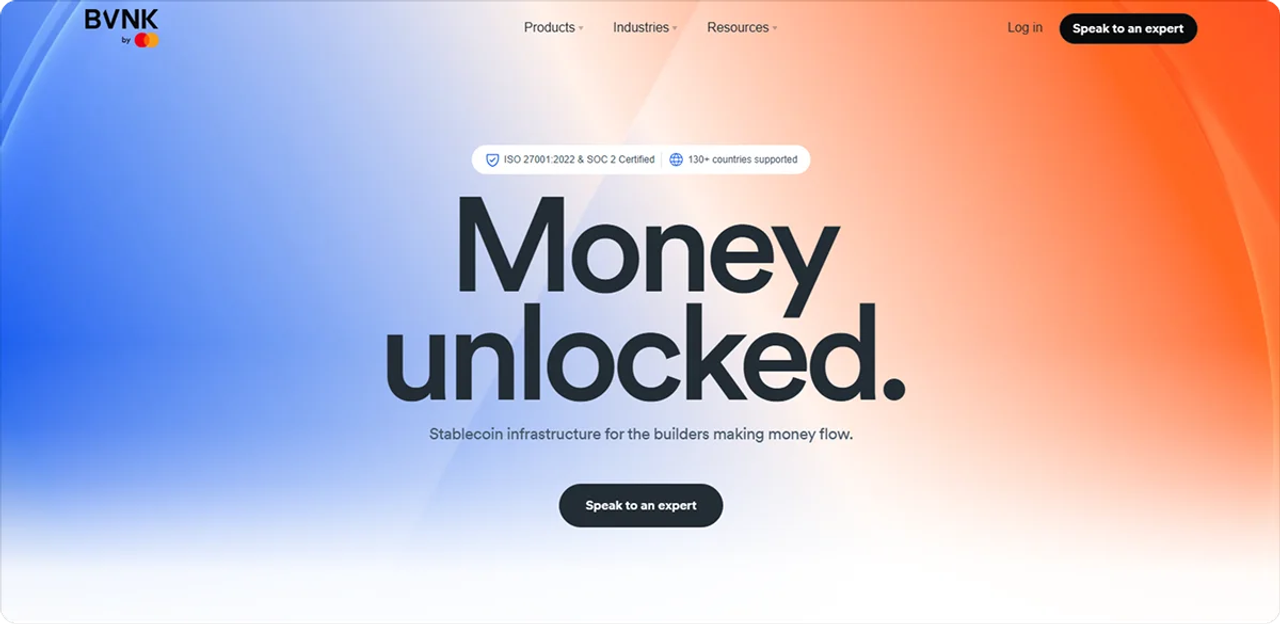
BVNK provides fiat and stablecoin payment infrastructure for businesses and platforms.
The broader product set includes payment acceptance, payouts, virtual accounts, wallets, conversion, and APIs.
Key Features
- Stablecoin payments: Businesses can accept stablecoins and settle in supported fiat currencies, while payouts can start from a fiat balance and reach the recipient in stablecoins.
- Virtual accounts: Account infrastructure supports selected fiat currencies and payment rails, depending on the jurisdiction and product.
- Wallets and conversion: Businesses can hold supported digital assets in wallets and convert between supported fiat currencies and stablecoins within the platform.
- Embedded payments: Platforms can integrate stablecoin acceptance and payouts into their own products without building every underlying component internally.
Who It's Best For
BVNK is most relevant to businesses that need to manage fiat and stablecoin balances within the same payment setup, especially across multiple currencies or markets.
3. Bridge
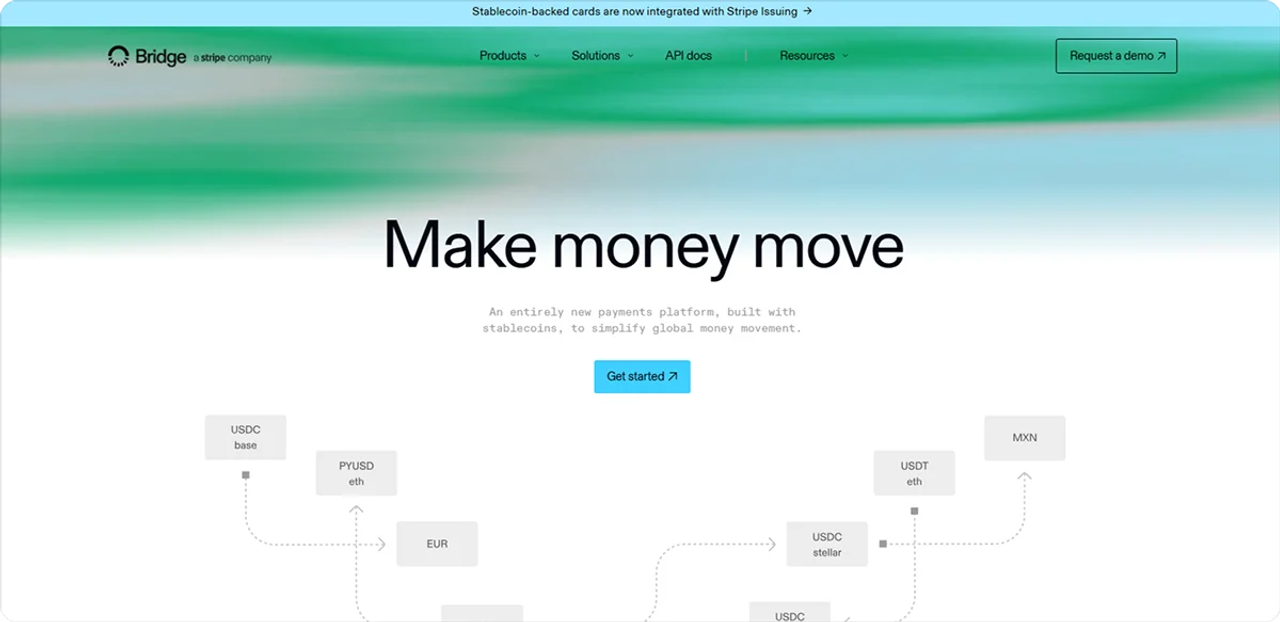
Bridge is designed for fintechs and platforms building stablecoin functionality into their own products. Businesses integrate it beneath the customer-facing layer, keeping product design and user experience within their own systems.
Key Features
- Orchestration: It supports on-ramps, off-ramps, and crypto-to-crypto transfers.
- Virtual accounts: Businesses can create account infrastructure for receiving supported fiat currencies.
- Wallets: Companies can hold, receive, and send supported stablecoins through wallet infrastructure.
- Cards and issuance: Bridge provides infrastructure for card programs and stablecoin issuance.
Who It's Best For
Bridge is a more relevant alternative for companies that want to build stablecoin payment functionality directly into their own product instead of relying on a finished business payment platform.
Bridge publicly described a Bitso partnership for MXN-USD B2B payments, which doesn't mean it powers every Bitso Business service.
4. Cobre
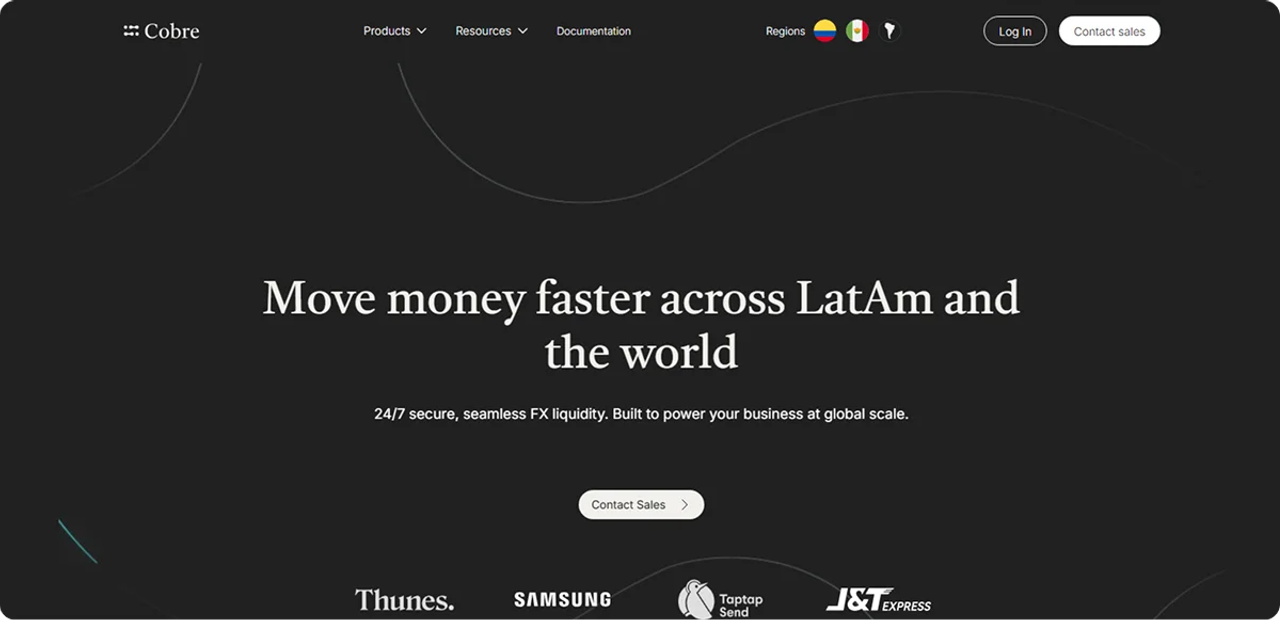
Cobre concentrates much of its documented infrastructure around payments and treasury operations in Mexico and Colombia.
Domestic rails connect with FX, APIs, stablecoins, and reconciliation within the platform.
Key Features
- Mexico payments: MXN collections and payouts can move through SPEI using CLABE-based account infrastructure.
- Colombia payments: Supported configurations include Bre-B, Fast Pay, PSE, Nequi, Bancolombia, and ACH-related flows.
- Cross-border FX: Currency conversion can connect directly with domestic payment execution.
- Stablecoin-connected flows: Published examples include USDC and USDT in cross-border and treasury scenarios.
- APIs and reconciliation: Payment instructions, webhooks, transaction references, and account records connect payment execution with internal tracking.
Who It's Best For
Cobre is most relevant when local payment execution and treasury operations need to work closely together in Mexico or Colombia.
5. dLocal
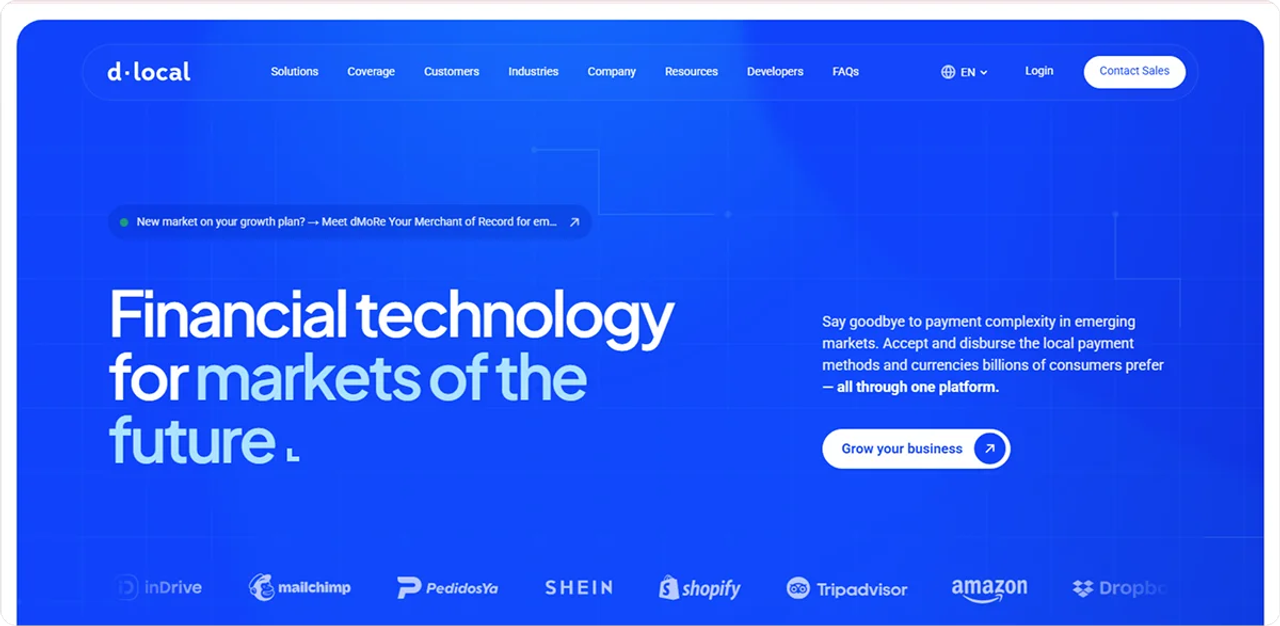
dLocal connects stablecoin funding and settlement with emerging-market payment infrastructure through Stablecoin Full. The product supports more than 1,000 local payment methods across over 60 markets.
Key Features
- Stablecoin-funded payouts: Stablecoin Full lets businesses fund payouts in stablecoins while recipients receive local fiat through dLocal’s payout network.
- Local collection with stablecoin settlement: Businesses can collect through dLocal’s local payment methods and receive settlement in supported stablecoins.
- Treasury and FX: Currency-management functions sit alongside payment execution.
Who It's Best For
dLocal is relevant to companies that want stablecoins to connect with local collection, payout, or settlement infrastructure across several emerging markets.
6. Airwallex
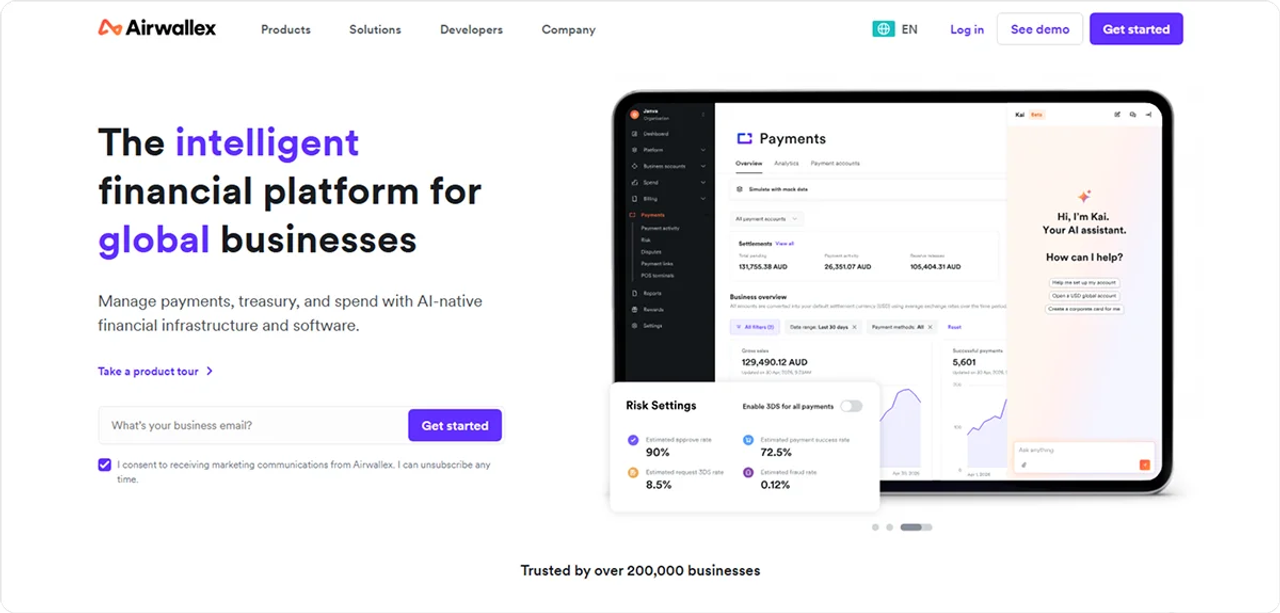
Airwallex places international payments inside a broader financial operations platform. Accounts, FX, payouts, payment acceptance, APIs, embedded finance, and stablecoin capabilities all form part of the wider product set.
Key Features
- Global accounts and payouts: Businesses can receive supported currencies through local payment methods or SWIFT and send payouts to more than 200 countries and regions across over 90 currencies, depending on market and account availability.
- FX: Treasury infrastructure supports a wide range of currency pairs for international business flows.
- APIs: Accounts, payments, FX, payouts, and other financial functions can connect with internal or customer-facing systems.
- Stablecoin payouts: Supports USDC payouts to Ethereum wallets through an early-access API feature, which is unavailable in the web app.
Who It's Best For
Airwallex is useful for companies that want accounts, FX, payouts, and international payments managed through the same platform alongside their broader finance operations.
7. XTransfer
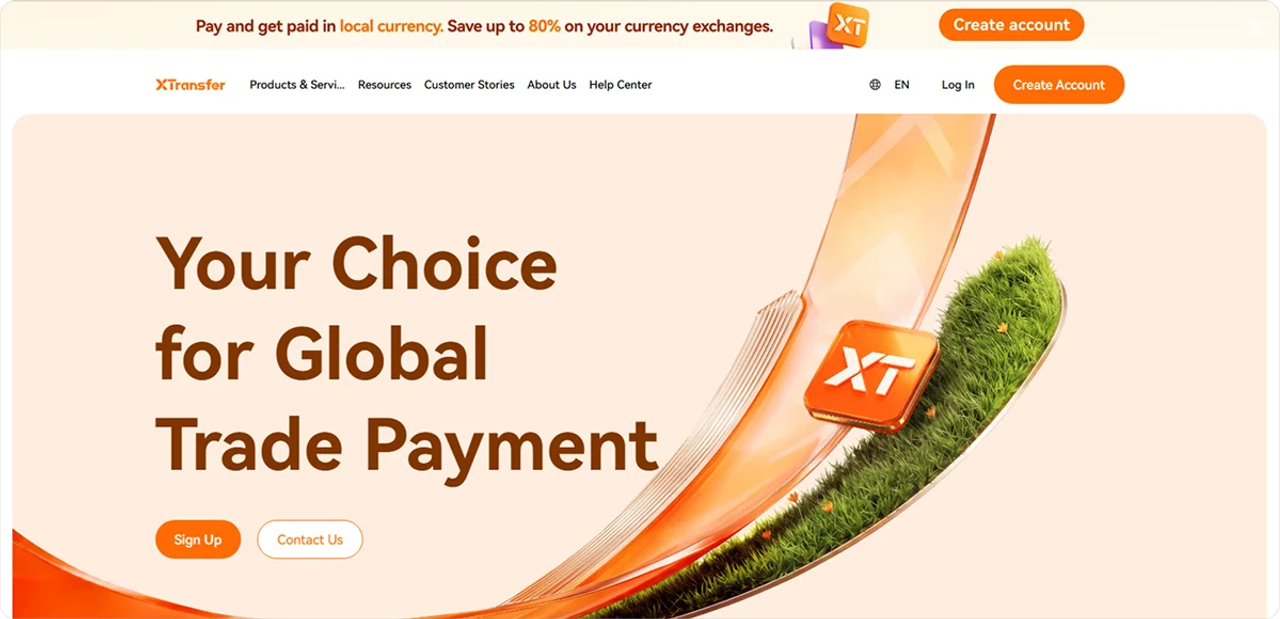
XTransfer centers its platform on B2B trade payments for importers and exporters. Business accounts, international collections, supplier payments, and FX form the core offering.
Key Features
- Business accounts: Companies can receive and move supported currencies through one account structure.
- International collections: Bank-account receipts are available across a wide international network, with local-currency collection supported in selected markets.
- Supplier payments: Businesses can send payments to overseas suppliers and other commercial counterparties, including recipients in China and other Asian markets.
- FX: Currency conversion forms part of the wider collection and supplier-payment workflow.
- LATAM activity: XTransfer supports local payment and collection activity across Brazil, Chile, Colombia, Mexico, and Peru.
Who It's Best For
XTransfer is particularly relevant when supplier payments and international collections are tied closely to trade with China or other Asian markets.
Read more: Best XTransfer Alternatives
Why VelaFi Stands Out Among Bitso Business Alternatives
Among Bitso Business alternatives, VelaFi is particularly relevant for businesses that need to connect local LATAM payment rails with international settlement, FX, and API access, especially across Latin America and Asia.
Its Mass Payout product adds a separate capability for businesses handling high-volume disbursements. Eligible clients can distribute USDC or USDT to multiple recipients through a single CSV upload for use cases such as merchant settlements, bulk withdrawals, commission payments, payroll, and incentive distributions.
VelaFi also expanded the technology supporting these payment flows in 2026. The company joined the Circle Payments Network and Global Dollar Network, while integrating with Fireblocks. For clients, Circle adds another network for stablecoin settlement, Fireblocks strengthens the digital-asset custody layer, and VelaFi plans to add USDG as another institutional settlement option through the Global Dollar Network.
VelaFi went live on Arc when Circle opened the network publicly on September 16, 2026. The integration gives businesses and financial institutions served by VelaFi access to USDC settlement on Arc, adding another settlement route for stablecoin-based payment flows.
Book a demo to discuss the markets, currencies, transaction volumes, and payment flows your business needs to support.
FAQ
1. What data do I need to move when switching from Bitso Business to another provider?
You may need to move beneficiary details, payment templates, transaction records, reconciliation data, and internal workflow mappings. The exact migration depends on how Bitso Business is connected to your finance or payment systems.
2. Will I need a local company or bank account to replace Bitso Business in Latin America?
Not always. Some providers can support foreign businesses without requiring a local legal entity or separate local bank account, while others may require one depending on the country, product, payment flow, and regulatory setup. A local entity may also be needed to access certain domestic accounts or payment services.
3. Can I keep Bitso for trading and use another provider for supplier payments?
Yes. You can use Bitso for trading, liquidity, or digital-asset functions and another provider for supplier payments, local collections, or specific cross-border corridors.
4. How should I compare costs across providers?
Compare the total cost of the same payment route, including transaction fees, FX spreads, conversion charges, and any applicable network or payout fees. Check the final amount the recipient receives and account for recurring or minimum fees when comparing providers.
Editorial disclosure: This guide is published by VelaFi, one of the providers included in the comparison. The evaluation is based on publicly available product information, documentation, and pricing details reviewed as of October 14, 2026. No independent test transactions were conducted or custom pricing quotes obtained. Features, geographic availability, payment rails, and pricing may vary by product, market, and eligibility.
Sources:
- McKinsey & Company (2025). How Banks Can Win Back Lower-Value Cross-Border Payments Business
- Bitso Business (n.d.). Bitso Business: Payments & FX With Stablecoins for Enterprises
- BVNK (n.d.). Build With BVNK: Developer Documentation
- Bridge (n.d.). Build With Bridge: Developer Documentation
- Cobre (n.d.). Pagos Internacionales Para Empresas
- dLocal (n.d.). Stablecoin Infrastructure for Emerging Markets
- Airwallex (n.d.). Airwallex: Global Payments & Financial Platform
- XTransfer (n.d.). XTransfer: Global Trade Payments
- Bitso Help Center (2026). How to Activate and Use Your USD Account on Bitso
- Airwallex (n.d.). USDC on Ethereum: Payout Network Documentation
- VelaFi (2025). VelaFi Achieves ISO 27001 Certification
- VelaFi (2026). VelaFi Achieves SOC 2 Type II Compliance
- VelaFi (2026). VelaFi Adds Mass Payout to Help Platforms Disburse to Hundreds of Recipients at Once
- VelaFi (2026). VelaFi Joins Circle Payments Network
- VelaFi (2026). VelaFi Joins Global Dollar Network for USDG Settlement
- VelaFi (2026). VelaFi Joins Fireblocks to Strengthen Digital Asset Custody
- VelaFi (2026). VelaFi Is Live on Arc From Day One
Note: n.d. indicates an undated source.