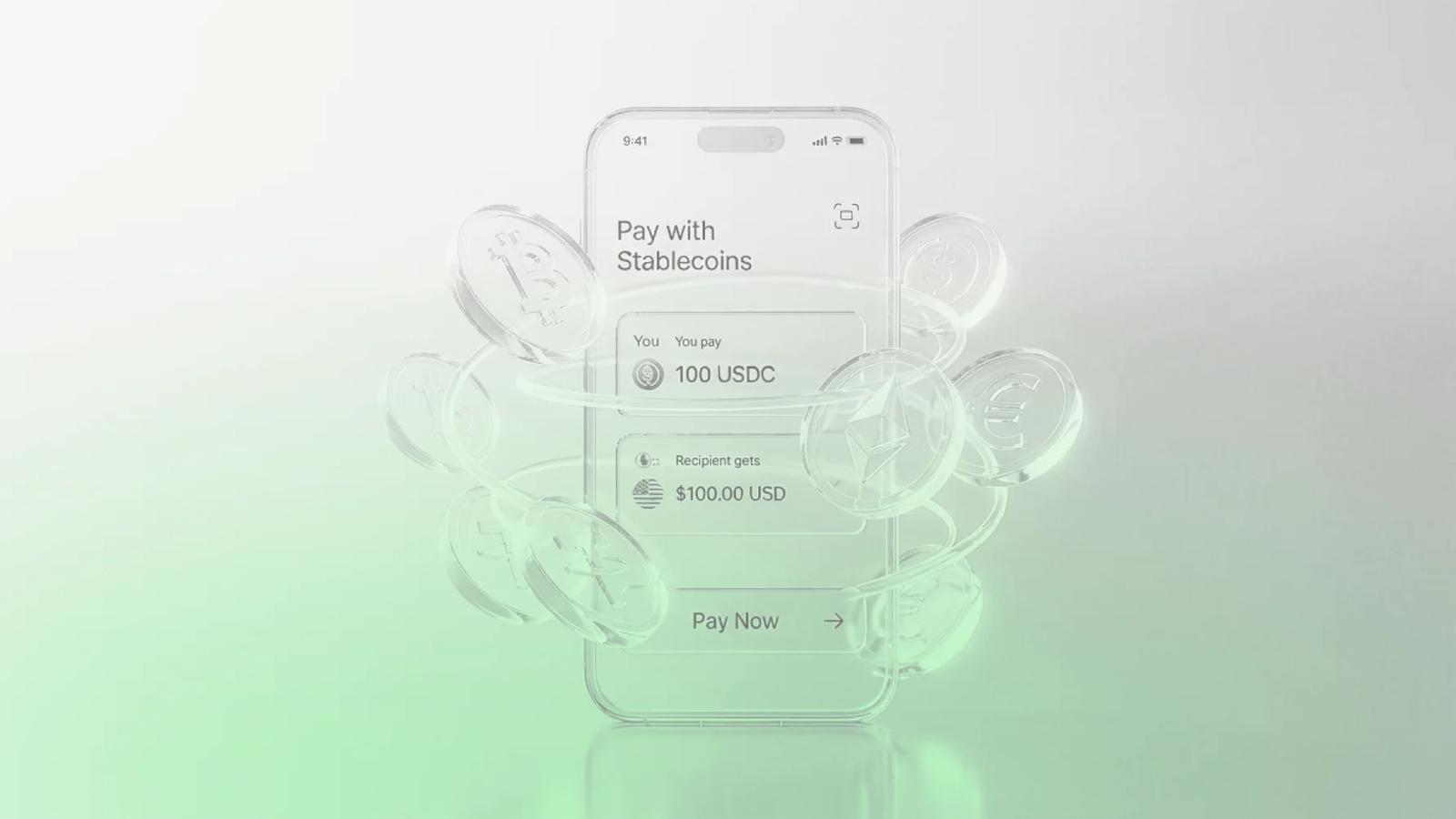
7 Best Payment Processors for Stablecoin Payments in 2026

Businesses can use stablecoins to accept customer payments or as part of the infrastructure for settling international transfers. In both cases, currency conversion, compliance checks, and local payout arrangements can affect when funds become available.
According to McKinsey and Artemis Analytics, B2B stablecoin payments accounted for an estimated $226 billion in annualized volume based on December 2025 activity, representing roughly 60% of actual stablecoin payment volume. The estimate excludes trading, internal transfers, and other non-payment blockchain activity.
Because most of that volume is business payments, the providers below are compared on how funds reach the recipient, not only on which stablecoins they accept. This article compares seven of the best payment processors for stablecoin payments by their payment models, documented capabilities, integration requirements, and pricing approaches.
Key Takeaways
- Stablecoin payment processors serve different business needs: Triple-A and BitPay focus on merchant acceptance, while Bridge provides API-based infrastructure and BVNK combines collections with embedded payment services.
- Stablecoin acceptance does not guarantee local fiat delivery: A processor may support a particular stablecoin without offering the conversion or payout options required in the recipient's country.
- Payment costs and delivery times depend on the full route: Processing fees, currency conversion, local payout charges, and settlement arrangements affect the final amount received and when funds become available.
- Exception handling matters when payments go wrong: Refunds, unsupported-network transfers, and invoice reconciliation require accurate transaction records and appropriate provider procedures.
- VelaFi supports B2B payments between Latin America (LATAM) and Asia: VelaFi connects local payment rails with currency conversion and stablecoin settlement, so on supported routes, businesses can fund cross-border transfers in fiat while recipients receive local currency without needing to hold stablecoins.
How We Evaluated Stablecoin Payment Processors
The seven providers cover different payment functions, from merchant checkout to cross-border settlement and embedded financial infrastructure.
The comparison considers the following criteria, based on publicly documented capabilities:
- Payment processing model: Merchant checkout, payment links, B2B settlement, and embedded payment services
- Supported stablecoins and networks: Payment assets and the blockchain networks available for transfers
- Settlement and funds availability: Fiat conversion, bank payouts, and the steps required before recipients can use their funds
- Geographic eligibility: Supported business locations, collection markets, and payout destinations
- Integration and payment records: APIs, webhooks, transaction references, and reconciliation functions
- Processing costs: Published fees, conversion charges, network costs, and custom pricing arrangements
- Regulatory arrangements: Documented licensing, onboarding responsibilities, and jurisdiction-specific restrictions
7 Best Payment Processors for Stablecoin Payments
The following table compares seven stablecoin payment processors by their primary business use cases, distinguishing capabilities, and pricing approaches:
| Provider | Best For | Why It Stands Out | Pricing Approach |
|---|---|---|---|
| VelaFI | Businesses handling B2B payments between LATAM and Asia | LATAM payment infrastructure connecting fiat conversion with cross-border stablecoin settlement | Custom pricing based on corridors, volumes, currencies, and integration needs |
| BVNK | Businesses and platforms managing repeat stablecoin collections and fiat settlement | Hosted stablecoin checkout with automatic conversion into USD, EUR, or GBP | Custom pricing based on services and payment requirements |
| Bridge by Stripe | Fintechs developing stablecoin payment products through APIs | Programmable payment routing with liquidation addresses | Custom pricing based on services and payment flows |
| Triple-A | Merchants seeking stablecoin acceptance with fiat settlement | White-label stablecoin checkout and email invoicing with fiat settlement | Custom pricing based on business requirements |
| Fipto | European businesses collecting stablecoins and making international payouts | USDC-to-EUR payment links and local-currency payouts | 0.9% payer fee for Receive transactions; separate pricing for other services |
| BitPay | Online merchants accepting stablecoins and other digital assets | E-commerce integrations with payment exception handling | 1%–2% + $0.25 per transaction, depending on monthly volume |
| Coinbase Business | Eligible US and Singapore businesses receiving stablecoin payments | Automated USDC conversion and scheduled bank withdrawals | Fees shown within the business account; no standard public rate listed |
Published rates cover different payment services and may be charged to different parties; additional conversion, network, and payout fees may apply.
Managing B2B payments between LATAM and Asia? VelaFi connects local payment rails with stablecoin-powered settlement. Talk to our team to explore supported payment routes.
1. VelaFi

VelaFi provides a B2B payment platform and APIs for managing local collections and payouts in Latin America, with additional payout capabilities in Asia. The company is ISO 27001 certified and has completed a SOC 2 Type II audit.
On supported fiat-to-fiat routes, stablecoins can serve as an intermediate settlement asset without requiring recipients to hold or manage them.
Key Features
- Fiat on/off ramps: VelaFi supports conversion between eligible fiat currencies and stablecoins, including USDC and USDT, for international payments and treasury operations.
- Stablecoin payment acceptance: Eligible businesses can create USDC and USDT payment links with configurable amounts, expiration dates, and transaction references, with access available on request.
- Local payment infrastructure: VelaFi supports SPEI in Mexico, Pix in Brazil, Bre-B and ACH in Colombia, CVU accounts in Argentina, and CCI accounts in Peru on eligible routes, along with CHATS payouts in Hong Kong and supported SWIFT payouts to Asia.
- Payment APIs and reconciliation: Businesses can integrate payment instructions, monitor transaction statuses, and retrieve conversion and settlement records through VelaFi's APIs.
- Compliance controls: VelaFi applies Know Your Business (KYB) onboarding, anti-money laundering and counter-terrorist financing (AML/CFT) screening, and transaction monitoring.
Who It's Best For
A Mexico-based importer paying an overseas supplier or an Asia-based PSP collecting from LATAM payers on behalf of its merchants can use VelaFi's supported fiat collection and payout routes.
2. BVNK
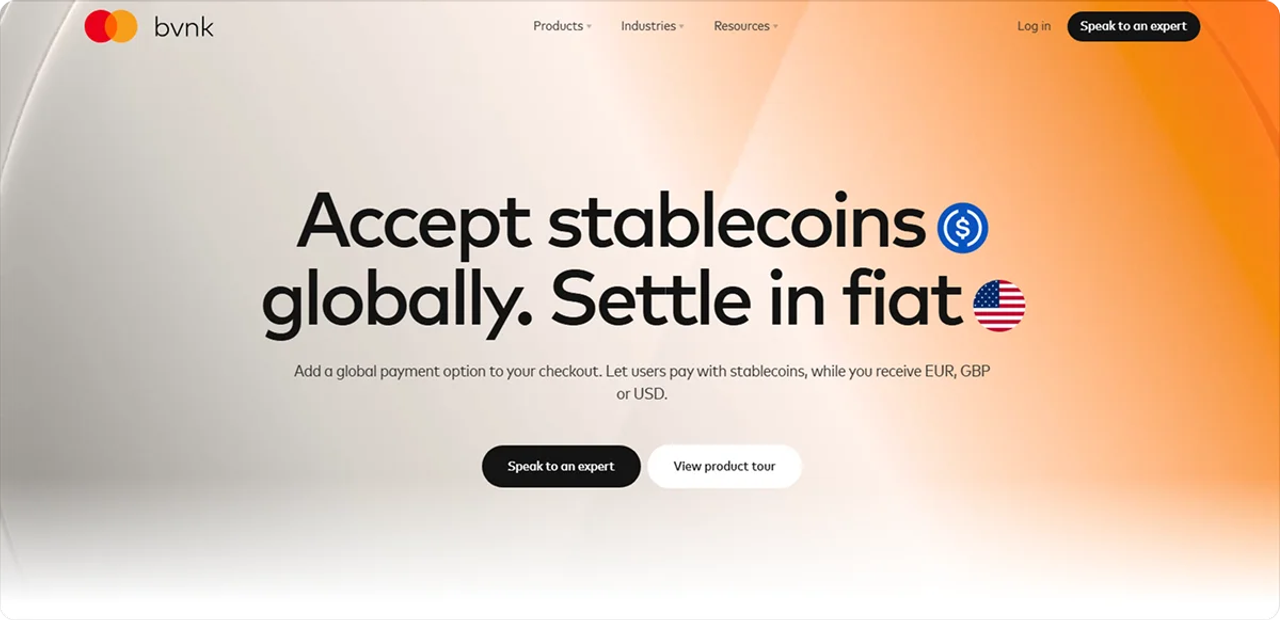
BVNK, acquired by Mastercard in August 2026, supports direct stablecoin collection for businesses and embedded payment infrastructure for platforms. Its services connect incoming stablecoin payments with supported fiat conversion and account functions.
Key Features
- Hosted payment pages: Customers can complete stablecoin transactions through checkout pages or payment links, with conversion quotes generated for individual payments.
- Fiat conversion: Incoming stablecoins can be exchanged into supported settlement currencies, including USD, EUR, and GBP.
- Channel payments: Reusable blockchain addresses allow repeat customer deposits to be identified without generating new payment requests.
- Virtual accounts: Named account details support fiat collections and connect incoming bank transfers with the appropriate customer or business account.
- Embedded payment infrastructure: APIs give third-party financial applications access to collections, transfers, and account functions.
- Supported stablecoins: BVNK supports USDC and USDT across selected networks, including Ethereum and Polygon, with asset and network eligibility varying by jurisdiction.
Who It's Best For
BVNK suits businesses and platforms receiving recurring stablecoin deposits that need to identify individual payers and convert eligible balances into USD, EUR, or GBP.
3. Bridge by Stripe
Bridge, acquired by Stripe in 2025, provides API-based orchestration for transfers between fiat currencies and stablecoins.
Key Features
- Payment orchestration: APIs initiate fiat-to-stablecoin, stablecoin-to-fiat, and stablecoin-to-stablecoin transfers across supported routes.
- Liquidation addresses: Stablecoins arriving at a designated blockchain address can be automatically forwarded to a configured fiat or stablecoin destination.
- Customer onboarding: API workflows support customer creation, terms-of-service acceptance, and additional identity verification when required.
- Wallet infrastructure: Developers can incorporate wallet functionality for holding, sending, and receiving supported stablecoins.
Who It's Best For
Bridge suits fintechs and software platforms with engineering teams building stablecoin payment products, such as digital wallets or cross-border transfer applications. Its API-based model requires integration, testing, and ongoing maintenance.
4. Triple-A
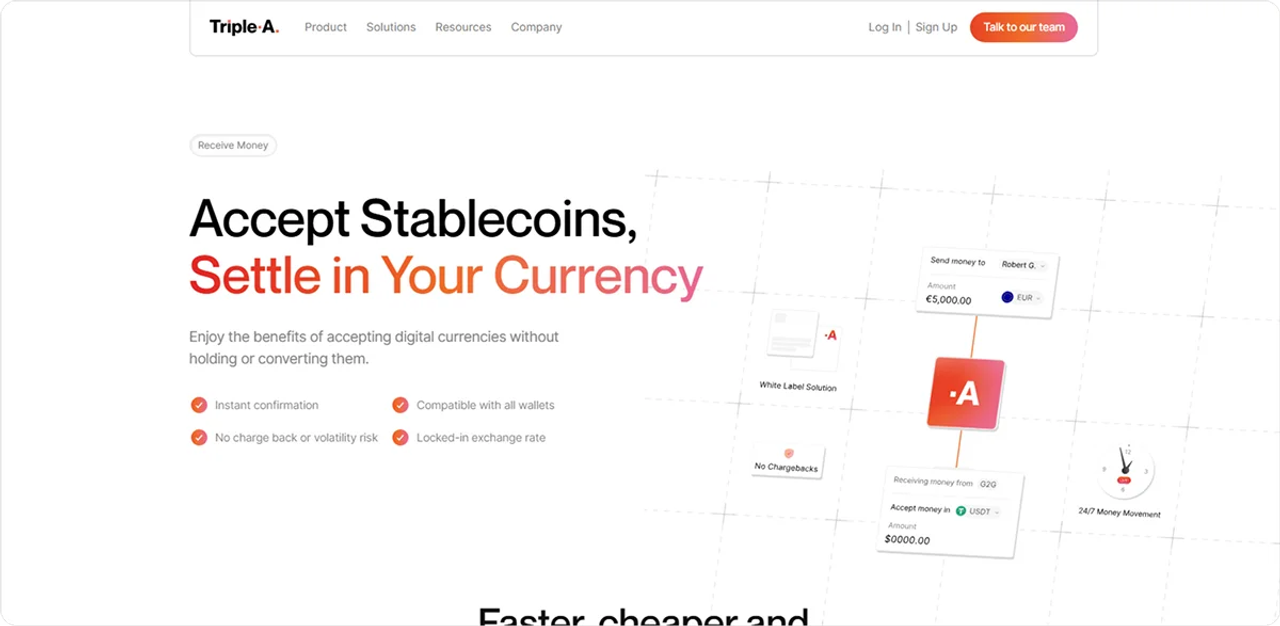
Triple-A processes stablecoin payments through merchant checkout and invoicing tools, with conversion into supported fiat settlement currencies.
Triple-A supports stablecoins including USDC and USDT and operates through regulated entities, including a Major Payment Institution licensed by the Monetary Authority of Singapore.
Key Features
- White-label checkout: Merchants can accept stablecoin payments through branded checkout pages.
- Payment invoicing: Businesses can email payment requests to customers without an online storefront.
- Fiat settlement: Triple-A converts stablecoin payments into supported fiat currencies and sends proceeds to merchants' bank accounts, with settlement available the next business day.
- API integration: Businesses can connect payment acceptance and transaction reporting to existing business applications.
Who It's Best For
Triple-A serves online retailers that add stablecoin checkout and professional services firms that collect international invoices.
5. Fipto
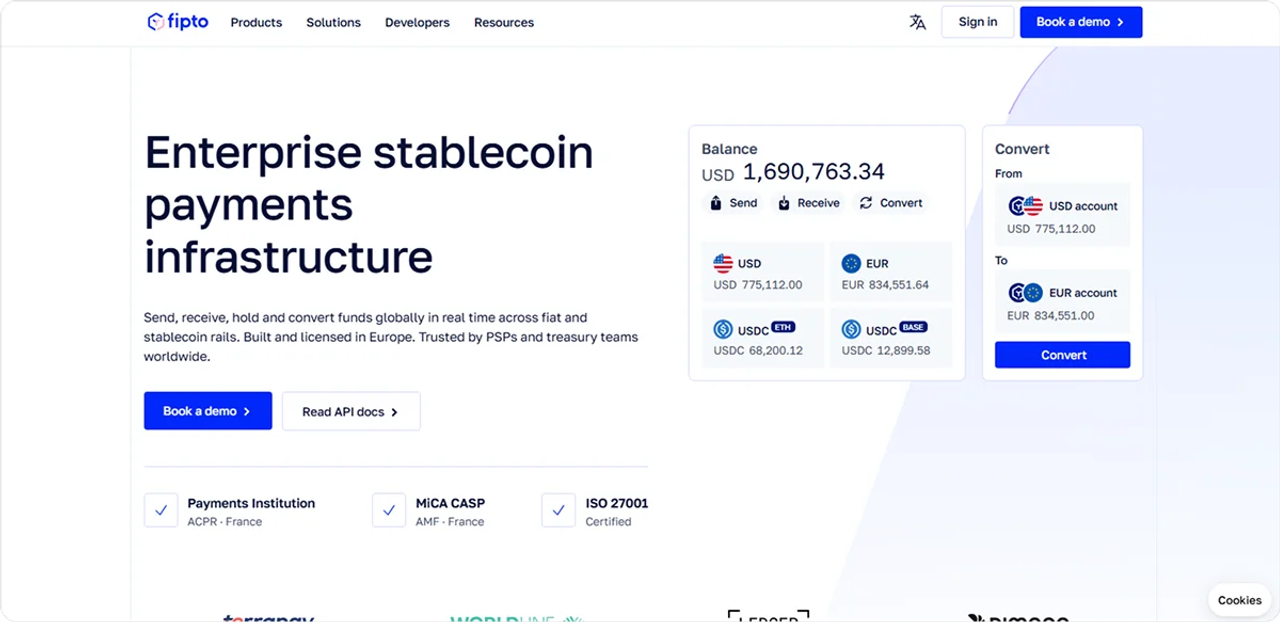
Fipto is a France-based payment provider holding a Payment Institution license and authorization as a Crypto-Asset Service Provider under the EU's Markets in Crypto-Assets Regulation (MiCA).
Key Features
- Stablecoin payment links: Businesses can collect USDC payments on Ethereum or Polygon, with proceeds automatically converted into EUR and credited to their Fipto accounts.
- Local-currency payouts: Fipto supports USDC-funded payouts in BRL, MXN, and COP through eligible domestic payment infrastructure.
- Fiat accounts: Named accounts and virtual IBANs support EUR collections through SEPA, alongside USD account services.
- Payment APIs: Businesses can automate payment requests, retrieve transaction information, and monitor transfer statuses through webhooks.
- Supported stablecoins: Fipto's wider API infrastructure supports USDC, EURC, and EURCV across selected blockchain networks, with availability depending on the asset.
Who It's Best For
Fipto may be suitable for businesses that invoice international customers in EUR but receive USDC, particularly when funds must be converted into a euro-denominated business account. Companies requiring USDT should note that Fipto does not currently support it.
6. BitPay
BitPay processes stablecoin and other digital-asset payments through merchant tools for online and in-person transactions.
Key Features
- E-commerce integrations: Plugins connect payment acceptance with platforms including Shopify and WooCommerce.
- Merchant invoicing: BitPay generates payment requests with exchange rates locked during a 15-minute payment window.
- Flexible settlement: Merchants can receive proceeds through eligible local-currency bank deposits, supported digital assets such as USDC and USDT, or a combination of both.
- Payment exception handling: Automated tools manage underpayments, overpayments, and other processing discrepancies.
- Business payouts: Companies can distribute supported digital assets to contractors, suppliers, and other recipients.
Who It's Best For
BitPay suits merchants seeking ready-made e-commerce integrations and digital-asset payment acceptance rather than building custom checkout infrastructure.
7. Coinbase Business

Coinbase Business accepts stablecoin payments into a custodial business account, with incoming proceeds settled in USDC.
Key Features
- Payment links: Businesses can create single-use or reusable requests for collecting stablecoins without building a checkout interface.
- Business invoicing: Businesses can issue invoices with customer details, payment terms, status tracking, and recurring billing arrangements.
- Checkout APIs: Businesses can embed stablecoin acceptance into applications and receive payment updates through webhooks.
- Stablecoin support: Customers can pay using USDC on supported networks or USDT on Ethereum where available, with incoming payments settling in USDC.
- Automatic fiat conversion: Account settings allow businesses to convert incoming USDC into USD and schedule withdrawals to linked bank accounts.
Who It's Best For
Coinbase Business fits US and Singapore companies that want stablecoin revenue to reach their bank account without manual conversion. Its custodial account model may be less suitable for businesses that require direct control of their own private keys.
How VelaFi Supports B2B Stablecoin Payments
VelaFi focuses on B2B cross-border settlement and local fiat payouts across Latin America and Asia, while also offering stablecoin payment acceptance for eligible businesses.
Its institutional integrations and payment products address different parts of the transaction, from settlement infrastructure to custody and bulk disbursements:
- Circle Payments Network: Connects VelaFi to participating financial institutions for stablecoin-based settlement, helping businesses combine cross-border transfers with supported local fiat payouts through VelaFi's payment infrastructure
- USDC settlement on Arc: Gives businesses an additional settlement network through Circle's Arc blockchain
- Global Dollar Network: Supports the planned introduction of USDG, a US dollar-backed stablecoin, as a future settlement asset
- Fireblocks integration: Uses multi-party computation (MPC) technology within VelaFi's custody infrastructure to strengthen private-key management and transaction security
- Mass Payout: Allows eligible businesses to distribute USDC or USDT to multiple recipients through one CSV upload
Supported products, payment rails, transaction limits, and the responsible regulatory entity are confirmed during onboarding. Final funds availability depends on the complete payment route and applicable compliance requirements.
Contact VelaFi to discuss the markets, currencies, transaction volumes, and payment flows your business needs to support.
FAQ
1. Do I need a local bank account to accept stablecoin payments from another country?
Not necessarily. You can accept stablecoins without a bank account in the payer's country. If you want fiat settlement, the processor may require a bank account in your business's name or an approved beneficiary in a supported settlement country.
2. What happens if a customer sends USDC on the wrong blockchain network?
The payment may not be credited, and the funds could become inaccessible. Recovery depends on the receiving wallet, network, and processor's capabilities, since confirmed blockchain transactions generally cannot be reversed.
3. Can a business refund a stablecoin payment after it has been confirmed?
Yes, if the payment processor supports refunds. The original blockchain transaction remains confirmed, so the refund requires a separate transfer, with fees and conversion terms depending on the provider.
4. How do businesses reconcile USDC payments with invoices?
Businesses can use payment links with invoice references or unique deposit addresses to match incoming USDC transfers with the correct invoices. For fiat settlements, finance teams should also record conversion rates, fees, and final payout references.
5. What happens if a stablecoin loses its peg during a payment?
The business may receive less fiat than expected if the stablecoin loses value before conversion. Depending on the provider, conversion may proceed at the prevailing market rate, be delayed, or be suspended.
Editorial disclosure: VelaFi publishes this article and is one of the providers reviewed. The comparison is intended to support an initial shortlist, not provide independent financial, legal, tax, or regulatory advice.
Methodology and limitations: We reviewed public, primarily first-party product and pricing information available as of October 13, 2026. Products, fees, eligibility, regulated entities, partner arrangements, and payment routes can vary by country and customer profile. We did not open accounts, execute test transactions, or obtain like-for-like quotes from every provider. Confirm current terms directly before making a decision.
Sources:
- McKinsey & Company, “Stablecoins in payments: What the raw transaction numbers miss,” 2026
- VelaFi, “VelaFi Launches Stablecoin Payments for Businesses,” 2026
- VelaFi, “VelaFi Joins Circle Payments Network,” 2026
- VelaFi, “VelaFi is live on Arc from day one,” 2026
- VelaFi, “VelaFi Joins Global Dollar Network for USDG Settlement,” 2026
- VelaFi, “VelaFi Joins Fireblocks to Strengthen Digital Asset Custody,” 2026
- VelaFi, “VelaFi Adds Mass Payout to Help Platforms Disburse to Hundreds of Recipients at Once,” 2026
- VelaFi, “VelaFi Achieves SOC 2 Type II Compliance,” 2026
- VelaFi, “VelaFi Achieves ISO 27001 Certification,” 2025
- BVNK, “Accept Stablecoins Globally. Settle in Fiat,” accessed 2026
- Bridge by Stripe, “Orchestration: Overview,” accessed 2026
- Triple-A, “Accept Stablecoins, Settle in Your Currency,” accessed 2026
- Fipto, “Accept Stablecoin and Fiat Payments,” accessed 2026
- BitPay, “Stablecoin Payment Processing Built for Global Commerce,” accessed 2026
- BitPay, “BitPay Pricing Structure: Simple Pricing for All Businesses,” accessed 2026
- Coinbase Business, “Crypto Payments for Businesses,” accessed 2026
- Fipto, “How Do I Get Paid via Payment Links?,” accessed 2026
- Fipto, “Supported Currencies and Networks,” accessed 2026